
Whale Sharks in the Maldives: Where, When & What to Expect
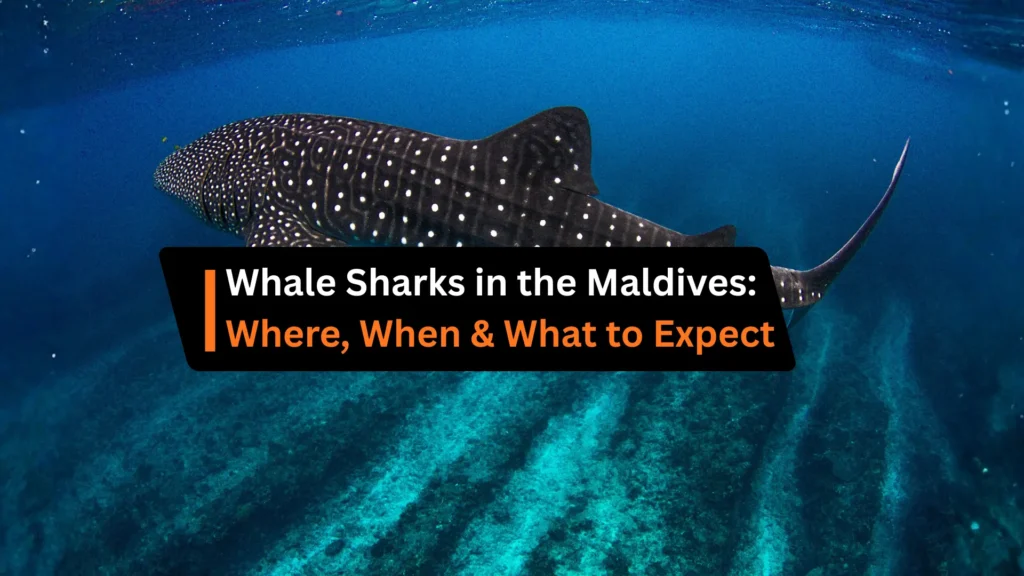
Nothing prepares you for it.
You’re drifting along a reef wall in South Ari Atoll. Visibility is good. The current is gentle. And then — from the blue — a shadow appears.
It grows larger. Then larger still. Until you realise you’re looking at something twelve metres long moving directly towards you with the unhurried confidence of an animal that has nothing to fear in the ocean.
A whale shark.
The largest fish on earth. And in the Maldives — one of the most reliably encountered.
| ✍️ For me, the whale shark is one of the most breathtakingly beautiful marine animals on the planet. Oh my God, standing face-to-face with one is truly magical—it’s a humbling, spiritual moment where time completely freezes. Looking at the intricate white spots patterned across its massive body, you can’t help but feel a deep sense of awe. Glory be to the Creator who sculpted such a gentle giant to move with this level of supreme harmony. It is a bucket-list encounter that rewrites your relationship with the ocean forever. |
This guide covers everything you need to know — where to find them, when to go, the best dive sites, and exactly what to expect when you finally come face to face with one.
1. Whale Shark Facts — What You’re Actually Looking At
Before you dive with one — know what you’re encountering.
| 🐋 Whale Shark — Quick Facts |
| Scientific name: Rhincodon typus Size: Up to 12 metres (40 feet) — the largest fish on earth Weight: Up to 20 tonnes Diet: Plankton, small fish, fish eggs — filter feeder only Speed: Typically 3–5 km/h — surprisingly slow Lifespan: Estimated 70–150 years IUCN Status: Endangered Maldives population: One of the largest known concentrations on earth |
Despite the name — a whale shark is neither a whale nor a particularly shark-like shark.
It is a filter feeder. It eats plankton. It poses absolutely no threat to divers.
What it does is move through the water with a slow, rhythmic grace that makes everything else in the ocean feel rushed.
| 💡Pro Tip: Whale sharks are listed as Endangered on the IUCN Red List. The Maldives is one of the few places on earth where their population is actually stable — thanks largely to strong marine protection laws and responsible dive tourism. Your presence, done correctly, contributes to their conservation. |
2. Are Whale Sharks Dangerous?
No.
Not even slightly.
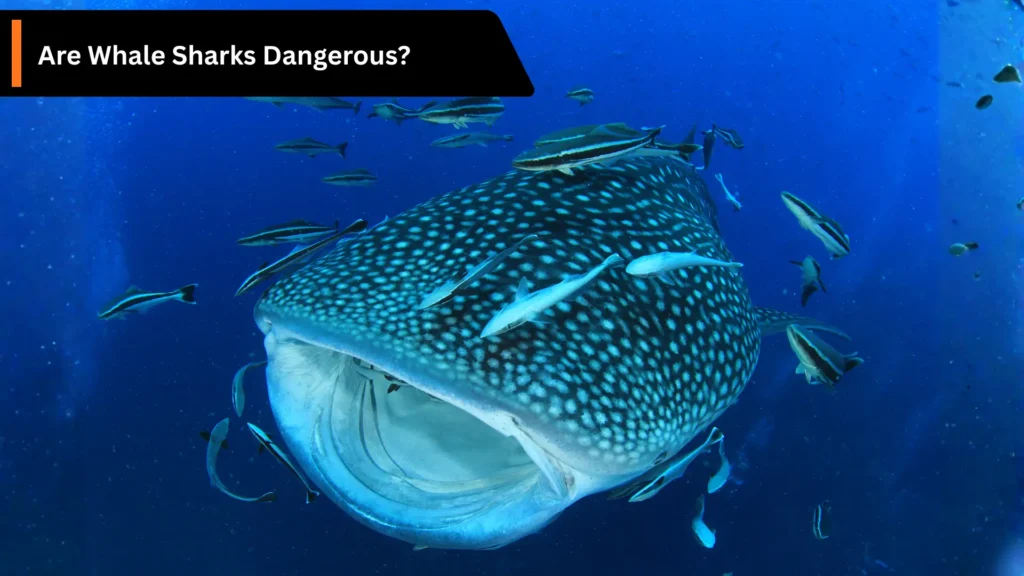
Whale sharks are filter feeders — they swim with their enormous mouths open to filter plankton and small fish from the water. They have no interest in divers whatsoever.
In thousands of documented encounters in the Maldives, there has never been a recorded attack on a diver.
| The only risk in a whale shark encounter: The tail. A whale shark’s tail is powerful enough to seriously injure a diver who gets too close behind it. Stay to the side — never directly behind. This is why the 3-metre distance rule exists. Not for the shark’s protection. For yours. |
| ✍️ I’ll be honest: before I truly understood pelagic behavior, the thought of dropping into the open blue with a 12-meter shark sent a spike of pure adrenaline through my chest. We are conditioned by movies to fear scale and size in the water. But the moment you slide beneath the surface and witness a whale shark in its natural element, that fear instantly evaporates, replaced by absolute serenity. Seeing how completely indifferent they are to human presence—coasting right past you without a single aggressive instinct—makes you realize that diving with these giants is actually one of the safest, most peaceful experiences you can have in the ocean. |
3. Where to Find Whale Sharks in the Maldives
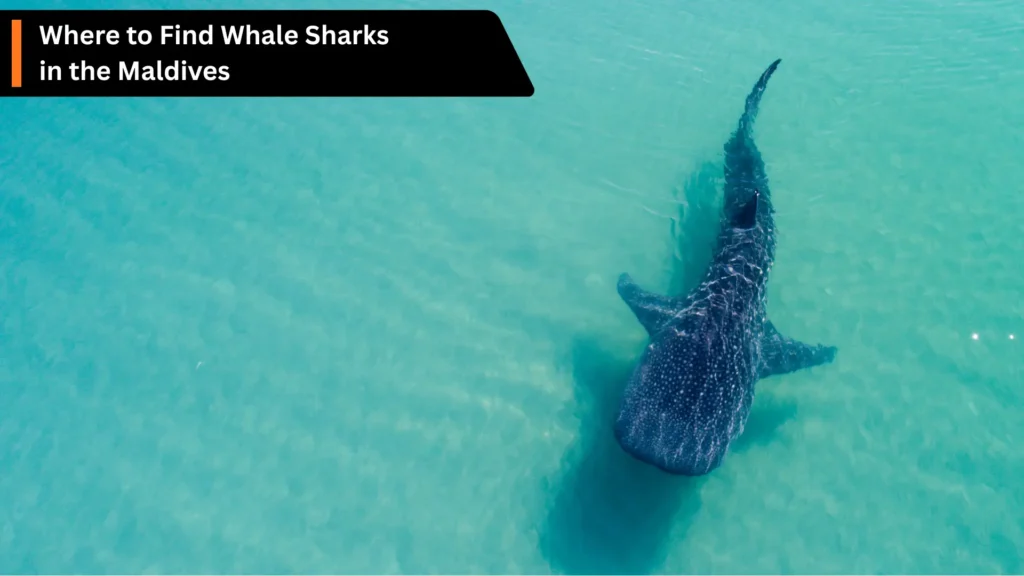
The Maldives is one of the very few places on earth where whale sharks can be reliably encountered year-round.
The reason? South Ari Atoll sits directly on a nutrient-rich current that sustains a permanent resident population of whale sharks — unlike most other destinations where sightings are seasonal at best.
The Primary Zone — South Ari Atoll
This is the whale shark capital of the Maldives. Possibly of the world.
- 📍 Dhigurah South Point — The single most reliable whale shark site in the Maldives. A gentle drift along the channel wall produces sightings on the vast majority of dives.
- 📍 Rangali Madivaru — Also known as Hammerhead Point. Whale shark sightings common alongside scalloped hammerheads.
- 📍 Maamigili — The waters around this local island are famous for consistent year-round encounters, often in very shallow water.
- 📍 Fish Head (Mushimasmingili Thila) — A protected marine reserve. Whale sharks regularly pass through this extraordinary thila dive.
Secondary Zones
- 📍 North Ari Atoll — Ellaidhoo house reef is famous for resident whale sharks visible directly from the beach.
- 📍 Rasdhoo Atoll — Small but significant whale shark zone. Often combined with hammerhead dives at dawn.
- 📍 Baa Atoll — Less consistent than Ari but occasional sightings, particularly during peak season.
| 💡Pro Tip: For the most reliable year-round whale shark encounters — book a liveaboard that specifically covers the South Ari route. Resorts located on South Ari (Vilamendhoo, Constance Moofushi) also offer very high encounter rates. |
“… Swimming alongside a filter-feeding gentle giant is an unforgettable experience, but it’s completely different from the interactive nature of a deep southern dive. Thrill-seekers often pair their Ari Atoll trip with a journey to the equator to experience maldives tiger shark encounters.”
also read our Carpe Diem Maldives Review: Is It Worth It? (2026)
4. Best Maldives Dive Sites for Whale Sharks

| 📍Dhigurah South Point South Ari Atoll | Depth: 5–25m | Level: All levels |
| The most reliable whale shark dive site in the entire Maldives — and arguably in the world. A gentle drift along the channel wall almost always produces sightings. The site is also rich in reef life — turtles, reef sharks, and eagle rays are common alongside the whale sharks. 💡 Dive this site early morning for the best encounters. The whale sharks tend to feed at the surface in the warmer morning water before descending as the day heats up. |
| 📍Maamigili (Baby Shark Alley) South Ari Atoll | Depth: 5–15m | Level: All levels |
| Named for the juvenile whale sharks frequently encountered here in very shallow water. Some of the most intimate whale shark encounters in the Maldives happen at this site — where young sharks feed in water barely deep enough to dive. 💡 This site is exceptional for snorkelers as well as divers. Some of the best whale shark videos from the Maldives have been filmed here in crystal-clear shallow water. |
| 📍Ellaidhoo House Reef North Ari Atoll | Depth: 5–20m | Level: All levels |
| Famous for having one of the most dramatic drop-offs and productive house reefs in North Ari Atoll. While South Ari is the official capital for permanent aggregations, Ellaidhoo’s reef acts as a major highway where pelagics—including pelagic eagle rays, grey reef sharks, and the occasional massive whale shark—make surprise appearances right off the drop-off wall. 💡 The house reef is fully equipped for night diving, where giant nurse sharks and stingrays regularly gather under the resort’s jetty lights. |
| 📍Rangali Madivaru South Ari Atoll | Depth: 20–35m | Level: Intermediate–Advanced |
| Known primarily as Hammerhead Point — but whale sharks are a regular bonus encounter here. The deeper sections of this dive occasionally produce open-water whale shark sightings alongside schools of hammerheads. 💡 The combination of whale sharks and hammerheads on a single dive is possible here — one of the most extraordinary double encounters available anywhere in the ocean. |
5. When to Go — Month-by-Month Calendar

The honest answer: any month. But here’s the detail:
| Month | Location | Reliability | Notes |
| January | Ari Atoll | ✅ Good | Dry season — excellent visibility |
| February | Ari Atoll | ✅ Good | Peak dry season — best conditions |
| March | Ari Atoll | ✅ Good | Warm water, reliable sightings |
| April | Ari Atoll | ✅ Good | Transitional — still very reliable |
| May | South Ari | ✅ Good | Wet season starting — more current |
| June | South Ari | ⭐ Peak | Peak season begins — multiple daily sightings |
| July | South Ari | ⭐ Peak | Best month — peak whale sharks + peak mantas |
| August | South Ari | ⭐ Peak | Peak season — most reliable month |
| September | South Ari | ⭐ Peak | Still peak — visibility improving |
| October | Ari Atoll | ✅ Good | Transitional — sightings remain solid |
| November | Ari Atoll | ✅ Good | Dry season returning — conditions improving |
| December | Ari Atoll | ✅ Good | Peak dry season — excellent visibility |
⭐ Peak season ✅ Good sightings All months: year-round Ari Atoll presence
| 💡 Pro Tip: June to September is peak whale shark season in South Ari Atoll — when the southwest monsoon brings nutrient-rich water that attracts feeding aggregations. Multiple sightings per day are common on a dedicated liveaboard route during this period. |
6. How to Dive with Whale Sharks in the Maldives — Do’s & Don’ts
The encounter is extraordinary. But how you behave determines the quality of your experience — and protects an endangered species.
| ✅ DO | ❌ DON’T |
| ✅ Stay calm and move slowly | ❌ Never touch or attempt to ride |
| ✅ Approach from the side — never from the front | ❌ Never approach from directly ahead |
| ✅ Maintain a 3-metre distance minimum | ❌ Never use flash photography |
| ✅ Turn off underwater strobes/flash | ❌ Never chase if it swims away |
| ✅ Let the shark set the pace — follow its lead | ❌ Never block its path |
| ✅ Stay neutrally buoyant — no kicking toward it | ❌ Never make sudden movements |
| ✅ Signal your dive guide immediately when you spot one | ❌ Never separate from your dive group |
| 💡 Pro Tip: The best whale shark encounters happen when divers stop chasing. Float still, breathe slowly, and let the shark come to you. A whale shark that hasn’t been startled will often circle back and approach of its own curiosity. Patience always wins. |
7. What the Encounter Actually Feels Like

No description fully prepares you for your first whale shark encounter.
The size is the first thing. Nothing in your experience of the ocean prepares you for an animal this large moving this close. The sheer scale of it — twelve metres of fish, patterned in white spots against dark grey — is genuinely disorienting.
Then comes the stillness. Despite the size, whale sharks move slowly. There is no aggression, no curiosity in the predatory sense. Just this enormous animal, moving through its ocean, briefly sharing space with you.
Most divers surface in silence after their first encounter. Not from exhaustion. From something harder to name.
| 💡 Pro Tip: Bring an underwater camera — but don’t let it become the focus of the dive. The divers who put the camera down and simply look are the ones who remember their encounter most vividly. You can watch the video later. You can only experience the encounter once for the first time. |
8. Liveaboard vs Resort — Which Gives Better Encounters?

Both can deliver excellent whale shark encounters. But there is a clear winner for serious whale shark divers.
| 🚢 Liveaboard | 🏨 Resort | |
| Site access | Multiple South Ari sites daily | Limited to nearby reefs |
| Dives per day | 3–4 dedicated WS dives | 2–3 dives max |
| Flexibility | Routes planned around WS | Fixed centre schedule |
| Best sites | Dhigurah, Rangali, Fish Head | House reef + 1–2 nearby |
| Encounter rate | ⭐ Very high | ✅ Good |
| Recommendation | ⭐ Best for whale sharks | Good — not optimal |
| 💡 Pro Tip: Exception: Ellaidhoo resort on North Ari Atoll has a resident whale shark on the house reef — accessible by simply walking into the water. For a resort-based whale shark experience, this is the best option in the Maldives. |
9. Frequently Asked Questions

Q: Are whale sharks in the Maldives year-round?
A: Yes — Ari Atoll has a permanent resident population of whale sharks that can be encountered any month of the year. Peak season is June to September when feeding aggregations are at their highest. No other atoll in the Maldives offers this consistency.
Q: Is it safe to dive with whale sharks?
A: Completely safe. Whale sharks are filter feeders with no interest in divers. In thousands of documented encounters in the Maldives, there has never been a recorded attack. The only precaution: maintain a 3-metre distance from the tail — which is powerful enough to injure if you get too close.
Q: Can beginners dive with whale sharks?
A: Yes — whale shark sites in South Ari Atoll are generally calm with mild currents. Open Water certification is sufficient for most sites. The encounters are shallow (5–20m on most sites), making them accessible for newly certified divers.
Q: What is the best dive site for whale sharks in the Maldives?
A: Dhigurah South Point in South Ari Atoll is the single most reliable whale shark site in the Maldives — with sightings on the vast majority of dives year-round. Maamigili (Baby Shark Alley) is extraordinary for shallow-water encounters with juvenile whale sharks.
Q: How long do whale shark encounters typically last?
A: Encounters vary from a few minutes to over 30 minutes. The key is staying calm and letting the shark set the pace. Divers who chase tend to have shorter encounters. Divers who float still and wait often find the shark circles back for extended interaction.
Q: Can I snorkel with whale sharks in the Maldives?
A: Yes — whale sharks frequently feed at or near the surface, making snorkeling encounters very common. Some sites (Maamigili, Dhigurah) offer excellent snorkeling encounters in shallow water. Not all operators permit snorkeling at dive sites — confirm before booking.
Q: Do whale sharks travel alone or in groups?
A: Both. Solitary encounters are most common. But aggregations of 5–20 whale sharks feeding on plankton blooms have been documented in South Ari Atoll, particularly during peak season. Aggregation encounters are among the most spectacular wildlife experiences on earth.
Final Word
The whale shark encounter is the reason many divers first visit the Maldives.
It is also, invariably, the reason they come back.
No photograph fully captures it. No description prepares you for the scale. The only way to understand what it means to share the water with the largest fish on earth is to be there.
South Ari Atoll is waiting. So are the whale sharks.
Explore More
- 🦈 Maldives Marine Life Guide
- 🗺️ Best Dive Sites in the Maldives
- 📅 Best Time to Dive Maldives
- 🚢 Best Maldives Liveaboards
- 🤿 Maldives Divers Complete Guide
Official Sources & Conservation References
To ensure this guide provides the most accurate, safe, and scientifically backed information for divers, our seasonal data and encounter guidelines strictly align with the following marine authorities:
- Whale Shark Population & Identification Data: Continuous year-round tracking and photo-identification logs in South Ari Atoll provided by the Maldives Whale Shark Research Program (MWSRP).
- Code of Conduct & Diver Safety Guidelines: Official eco-tourism regulations and distance rules for encounters, backed by Green Fins Maldives / Reef-World Foundation.
- Maldives Marine Protected Areas (MPAs): Legal documentation regarding the protection of South Ari Atoll (SAMPA) and environmental laws via the Maldives Environmental Protection Agency (EPA).
- Global Conservation Status: Red List assessment and population stability records for Rhincodon typus via the IUCN Red List of Threatened Species.

