Tiger Shark Maldives: Fuvahmulah, Is It Safe & How to Dive With Them
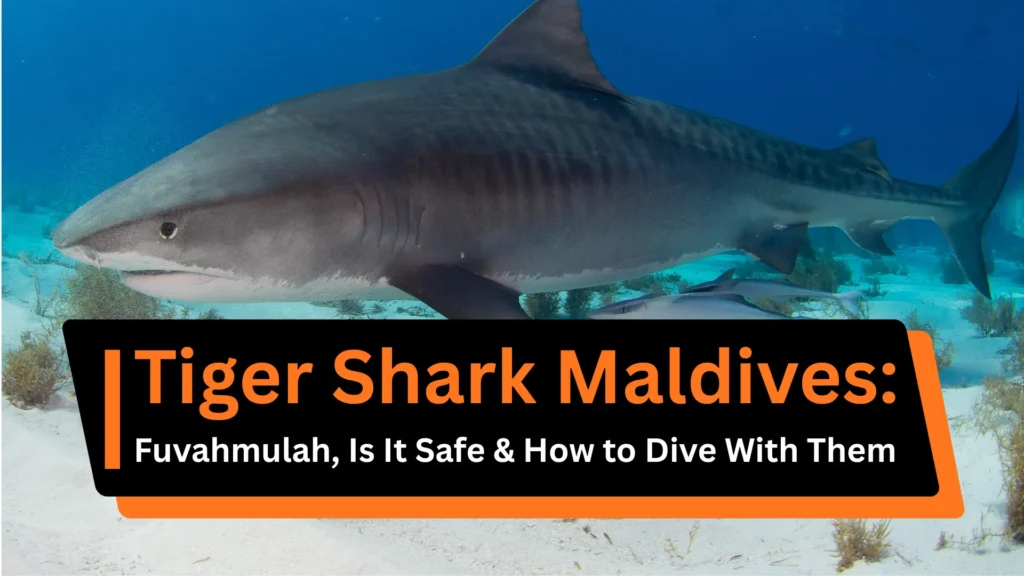
Her name is Rose.
She is 4.5 metres long. She has been swimming the waters around Fuvahmulah — a remote southern atoll in the Maldives — for years. And she knows the divers.
Not in a trained, captive sense. In the way that a wild apex predator learns to associate a particular location with regular, harmless visitors.
Fuvahmulah is home to over 300 individual tiger sharks — the highest concentration of reliably encountered tiger sharks anywhere on earth. They circle the channel where local dive operators take small groups of experienced divers. Face to face. Open water. No cage.
This guide tells you exactly what that experience involves — the facts, the safety reality, and how to plan the trip.
| ✍️ It’s a fragile split-second where fear and pure, raw adrenaline collide. Looking a 4.5-meter tiger shark directly in the eye in the open blue without the psychological safety of a steel cage forces an immediate sensory shift. Your heart rate spikes, not from panic, but from a profound awe of being in the presence of an evolutionary masterpiece. It’s the ultimate visual contrast: the absolute serenity of the deep ocean paired with the intense, focused energy of an apex predator scanning your movement with total composure. |
1. Tiger Sharks in the Maldives — The Facts

| 🦈 Tiger Shark — Quick Facts |
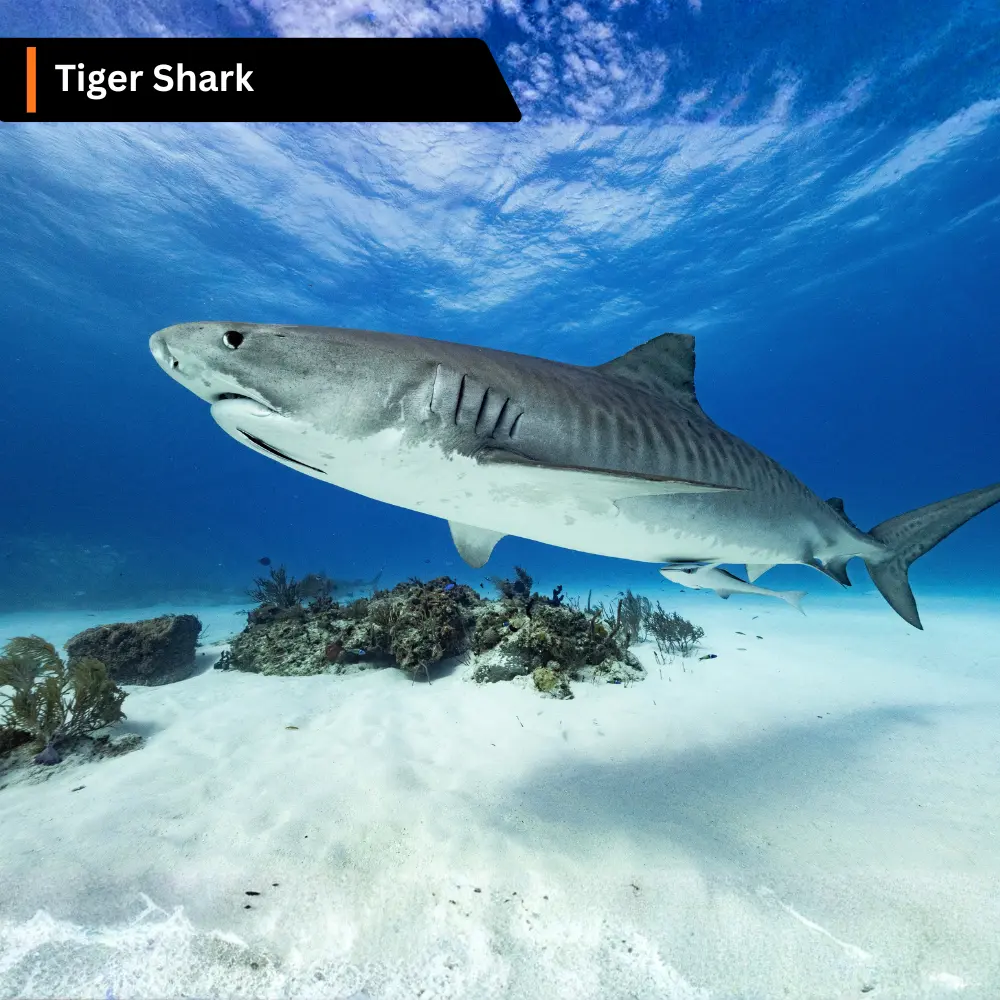
| Scientific name: Galeocerdo cuvier Size: Typically 3–4.5m — females larger than males. Rose (Fuvahmulah) measures 4.5m. Weight: 385–635kg for adults Diet: Highly varied — fish, rays, sea turtles, dolphins, sea birds, carrion Distinctive markings: Tiger stripes on juveniles, fading with age. Blunt snout. Large upper tail lobe. IUCN Status: Near Threatened — declining globally due to finning and bycatch Maldives population: 300+ identified individuals concentrated at Fuvahmulah Globally: Second most dangerous shark species after the bull shark — in open water context |
Tiger sharks are apex predators. Unlike whale sharks or manta rays, they are not filter feeders. They eat almost anything — and their curiosity is genuine.
That said: tiger sharks at Fuvahmulah are not fed, not baited, and not trained. They are wild animals that have learned to associate the channel with the presence of divers — and have, over hundreds of dives, shown consistent, manageable behaviour with properly guided groups.
2. Fuvahmulah — Why Here and Nowhere Else?

Fuvahmulah (also spelled Fuvamulah or Foammulah) is the only single-island atoll in the Maldives — an isolated landmass sitting directly on the equator in the far south, about 490km from Malé.
It is geographically unique — and that uniqueness is exactly why the tiger sharks are here.
- 🌊 Deep water immediately off the island — the ocean drops to 2,000m+ within a short swim of the shore. This is unusual even for the Maldives.
- 🐟 The depth brings pelagic life close — tuna, dolphins, rays, and the tiger sharks that follow them.
- 🌡️ Equatorial position — warm, nutrient-rich water year-round creates a permanent feeding ground.
- 🦈 No competing large predators at this depth — tiger sharks dominate the food chain here.
- 🚫 Historically remote and unvisited — the shark population developed without significant human pressure.
| 💡 Pro Tip: Fuvahmulah is not accessible via standard Maldives tourist routes. There are no luxury resorts here. Getting here requires a domestic flight from Malé (approximately 1 hour) or a very long speedboat journey. This remoteness is part of what makes it extraordinary — and what has preserved the shark population. |
| ✈️ Planning your journey south? Fuvahmulah requires a domestic flight connection from Malé. You can check live schedules, prices, and secure your local transfers here. Find Flights & Local Transport to Fuvahmulah → |
3. The Named Sharks — Rose, Manike & the Fuvahmulah Population

One of the most remarkable aspects of Fuvahmulah’s tiger shark population is how well-documented individual sharks have become.
| Name | Size | Description |
| Rose | 4.5m female | The most famous tiger shark in the Maldives. Recognised by her distinctive markings and size. Frequently encountered in the main dive channel. Completely habituated to divers. |
| Manike | 3.5m female | Named by local divers. Frequently sighted near the island. Known for curious, close-range behaviour with dive groups. |
| The 300+ | Various | Over 300 individual tiger sharks have been photographically identified at Fuvahmulah — one of the largest catalogued populations of any shark species anywhere. |
The fact that individual sharks can be named and recognized across years of encounters is itself remarkable — and speaks to the stability and health of this population.
4. Is It Safe to Dive with Tiger Sharks?
This is the question that deserves an honest answer — not marketing language.
| The Honest Answer: Tiger sharks are the second most dangerous shark species globally in terms of unprovoked attack statistics. They are apex predators with no natural fear of humans. At Fuvahmulah specifically — with experienced local guides, correct behaviour, and proper group management — the dives have an excellent safety record over hundreds of documented encounters. This is not a zero-risk activity. But it is a managed risk — and one that thousands of experienced divers have undertaken without incident. |
| ⚠️ This Is Not for Everyone Tiger shark dives at Fuvahmulah require a minimum Advanced Open Water certification and 50+ logged dives. Open Water certified divers with limited experience should not attempt this dive. The open ocean setting, depth (20–35m), and presence of multiple large apex predators requires genuine diving competence. The local operators assess fitness to dive — listen to them. |
What Makes Fuvahmulah Dives Manageable
- ✅ Small groups — maximum 6–8 divers per guide at reputable operators
- ✅ Experienced local guides who know individual sharks by sight
- ✅ Established protocols developed over years of encounters
- ✅ The sharks are not fed or baited — their behaviour is natural, not artificially induced
- ✅ The sharks have learned that divers are not prey — consistent, respectful behaviour has conditioned this over time
- ✅ Divers are briefed thoroughly before every single dive
| ✍️ The fundamental difference is the shift in authority. When you dive with a whale shark or a manta ray, you are observing a gentle, passive giant moving along its path, almost oblivious to your presence. With a tiger shark, the dynamic is entirely interactive. They look back at you. Their direct, calculating approach forces you to abandon the passive tourist mindset and immediately adopt a high level of diving discipline. You aren’t just an observer anymore; you are a participant in a silent, respectful negotiation of space with the true ruler of the equatorial deep. |
5. Tiger Shark Maldives: When to Go — Season Calendar

Tiger sharks are present at Fuvahmulah year-round — but conditions and encounter quality vary significantly:
| Month | Tiger Sharks | Conditions | Visibility | Verdict |
| January | ⭐ Peak season | Calm — best of year | 20–30m | ⭐ Best month |
| February | ⭐ Peak season | Excellent | 20–30m | ⭐ Excellent |
| March | ⭐ Peak season | Very good | 15–25m | ⭐ Excellent |
| April | ✅ Good | Transitional | 12–20m | ✅ Good |
| May | ⚠️ Reducing | Wet season starts | 10–15m | ⚠️ Variable |
| June–Oct | ⚠️ Very limited | Rough open ocean | 8–15m | ❌ Not recommended |
| November | ✅ Returning | Improving | 12–20m | ✅ Good |
| December | ✅ Building | Good conditions | 15–25m | ✅ Good |
⭐ Peak ✅ Good ⚠️ Variable ❌ Not recommended
| 💡 Pro Tip: January to March is the undisputed peak season — calm seas, best visibility, highest shark encounter rates. Book 4–6 months ahead for peak season dates. The window is strict: Fuvahmulah’s open ocean location means rough conditions from May to October make diving difficult and sometimes impossible. |
| 🏨 Peak Season Alert (January – March): Accommodations and top dive shops on Fuvahmulah fill up months in advance due to strict seasonal windows. Browse and book diver-friendly guesthouses on Fuvahmulah via Trip.com → |
6. How to Plan a Fuvahmulah Tiger Shark Dive
Getting to Fuvahmulah
- ✈️ Domestic flight from Velana International Airport (Malé) — approximately 1 hour. Maldivian Airlines and Mega Maldives serve the route. Cost: approximately $80–$150 return.
- 🚤 Speedboat from Malé — extremely long (12+ hours) and not recommended. Fly.
- 🏝️ Accommodation on the island — guesthouses only, from approximately $60–$120/night. No luxury resorts. Basic but clean.
Choosing a Dive Operator
- ✅ Use an operator with a minimum 3-year track record at Fuvahmulah specifically
- ✅ Maximum 6–8 divers per guide — refuse larger groups
- ✅ Ask specifically: ‘Do you bait or feed the sharks?’ — the answer must be no
- ✅ Confirm the guide knows individual sharks by name — this indicates genuine experience
- ✅ Check recent reviews on Google and diving forums — staff turnover affects quality
Certification & Experience Requirements
- ✅ Minimum: Advanced Open Water Diver
- ✅ Minimum: 50 logged dives strongly recommended
- ✅ Drift diving experience preferred — open ocean conditions require buoyancy control
- ✅ Rescue Diver certification is a significant advantage
- ❌ Open Water only — not suitable for this dive
- ❌ First-time ocean divers — not suitable regardless of certification
What a Typical Tiger Shark Dive Looks Like
- Boat departs at dawn — sharks are most active in the early morning
- Descent to 20–35m in the channel — open ocean, blue water, limited bottom
- Guide positions the group in formation facing the current
- Tiger sharks appear from the blue — sometimes one, sometimes 5–10 simultaneously
- 30–50 minute bottom time depending on depth and conditions
- Slow ascent with safety stop — sharks often follow divers to the surface
- Surface interval on the boat — debrief and second dive if conditions allow
| 🤿 Looking for a vetted 5-star operator? Don’t risk large groups or unverified guides. Compare and book certified Fuvahmulah Tiger Shark Dive Packages with top-rated operators → |
| 💡 Pro Tip: The shark encounter at Fuvahmulah is not like whale shark diving — where you drift alongside a gentle giant. Tiger sharks approach with genuine curiosity and directness. They will come close. They will investigate. The experience is extraordinary precisely because it is genuine wild animal behaviour, not a managed wildlife encounter. Stay calm. Trust your guide. |
7. All Sharks in the Maldives — Complete Guide
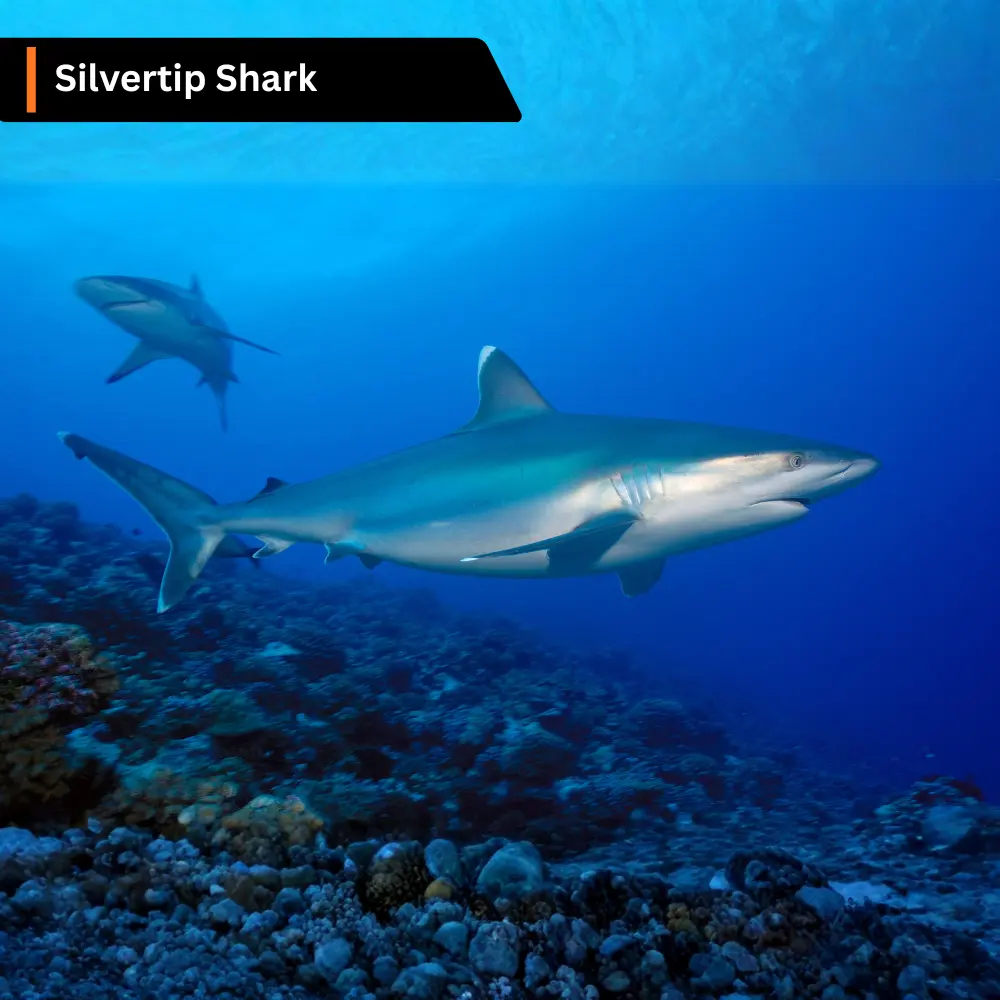
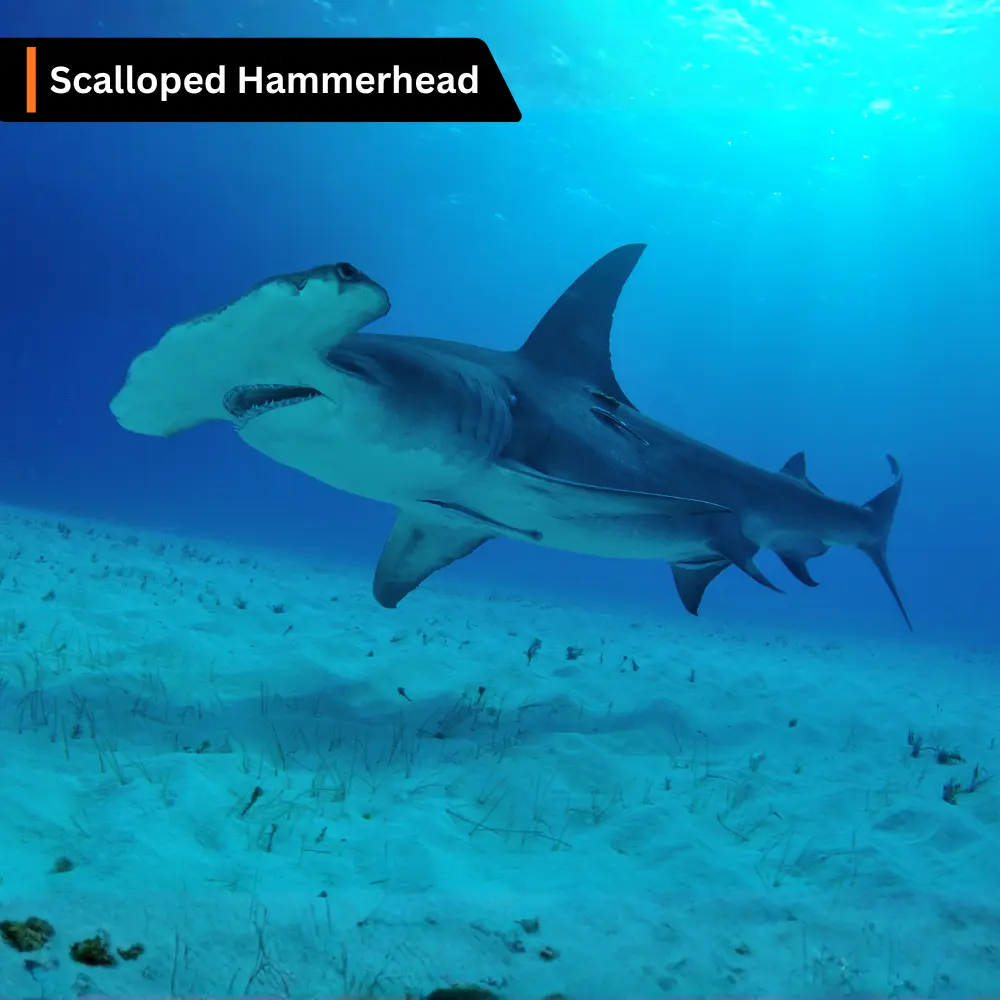
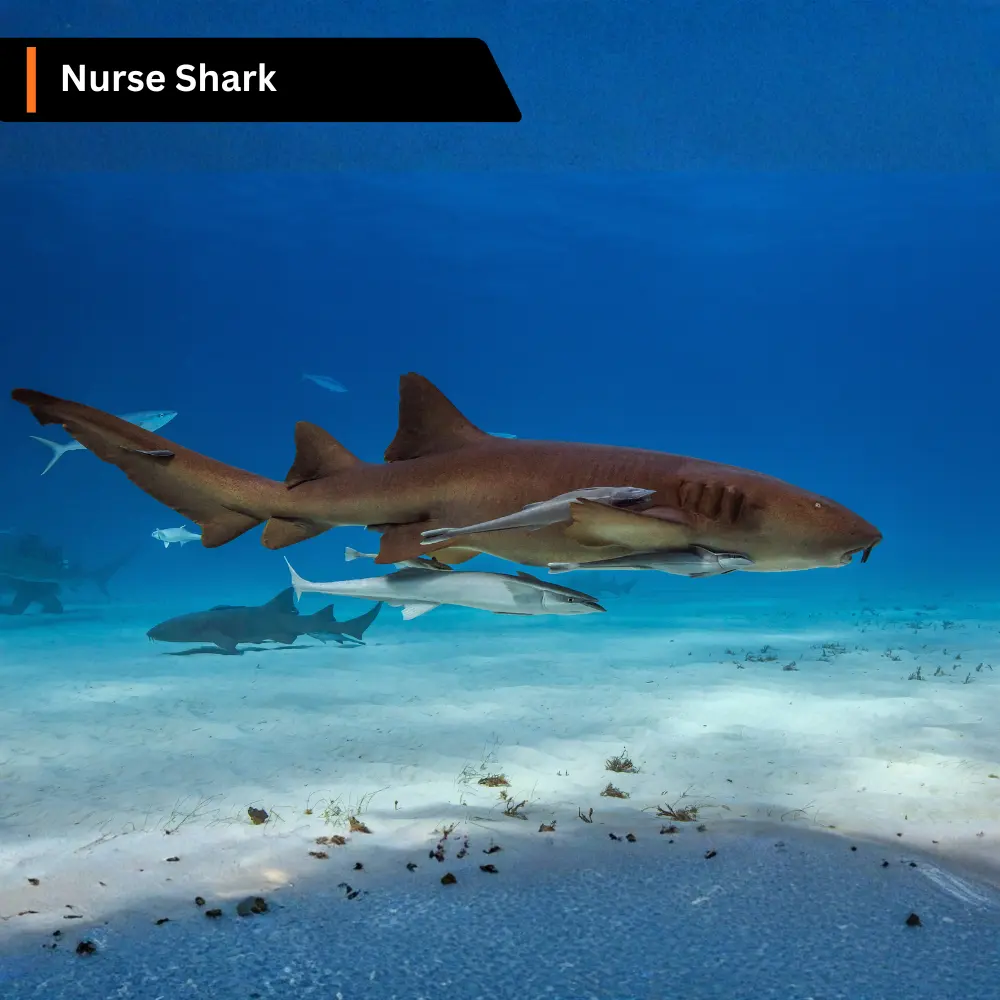
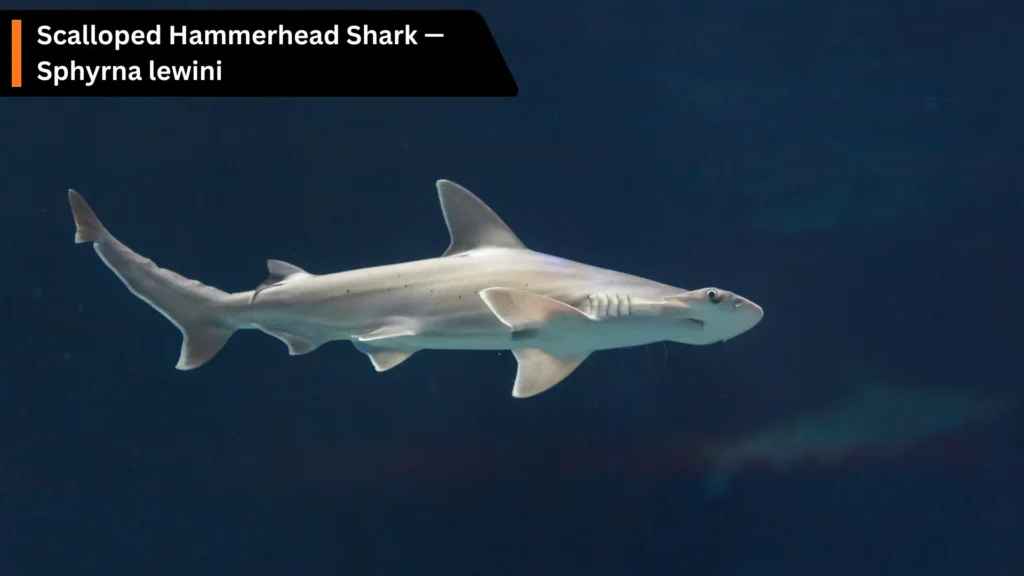
People also search for ‘are the sharks in Maldives harmless?’ and ‘great white shark Maldives’. Here’s the complete honest picture:
| Shark Species | Size | In Maldives? | Dangerous? | Where to See |
| Tiger Shark | 3–5m | ✅ Fuvahmulah only | ⚠️ Respect required | Fuvahmulah, Jan–Mar |
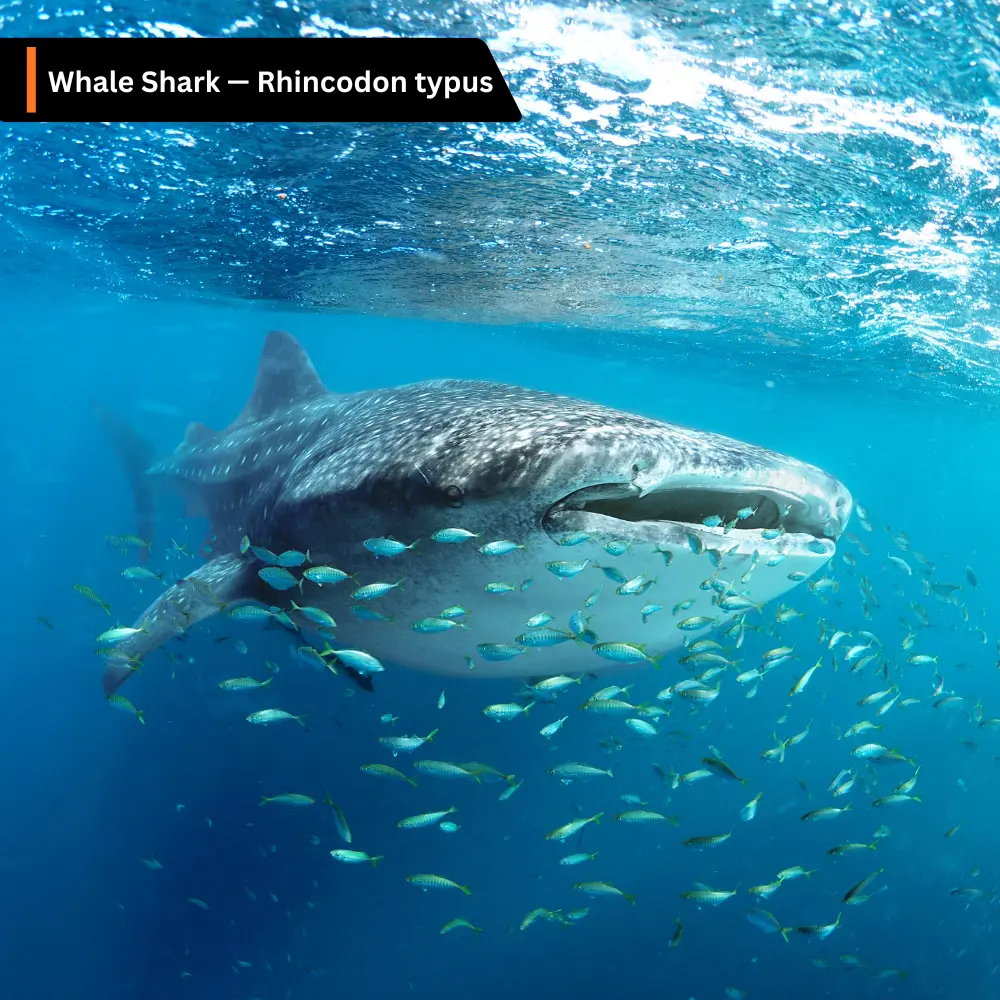
| Whale Shark | 8–12m | ⭐ Very common | ✅ Completely safe | Ari Atoll, year-round |
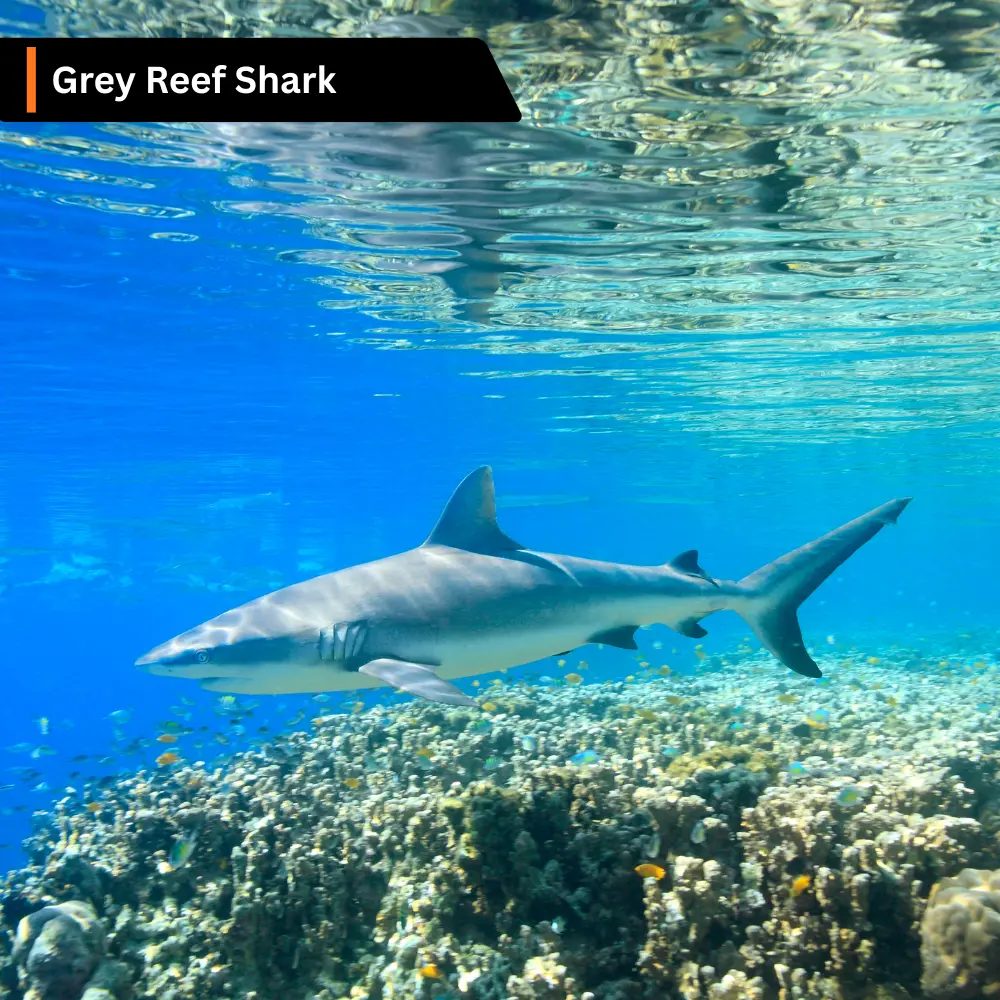
| Grey Reef Shark | 1.5–2m | ⭐ Everywhere | ✅ Safe if respected | All atolls, year-round |
| White Tip Reef Shark | 1.5–2m | ⭐ Very common | ✅ Completely safe | All atolls, especially night dives |
| Nurse Shark | 2–3m | ✅ Common | ✅ Safe — bottom dweller | Sandy bottoms, all atolls |
| Scalloped Hammerhead | 3–4m | ✅ Lhaviyani | ✅ Safe if approached correctly | Lhaviyani, Nov–Apr dawn |
| Bull Shark | 2–3m | ⚠️ Rare sightings | ⚠️ Caution advised | Very occasional, deep channels |
| Great White Shark | 4–6m | ❌ Not present | N/A | Not found in Maldives |
| Key Fact — Great White Sharks: Great white sharks are NOT present in the Maldives. The water is too warm for them — great whites prefer cooler temperate waters. This is a common misconception. You will not encounter a great white shark in the Maldives. |

8. Do’s & Don’ts — Tiger Shark Dive Behaviour

Your behaviour underwater determines the quality — and safety — of the encounter:
| ✅ DO | ❌ DON’T |
| ✅ Always dive with an experienced local guide | ❌ Never dive alone — always buddy or group |
| ✅ Stay calm — no sudden movements | ❌ Never wear shiny jewellery or bright colours |
| ✅ Maintain group formation — never stray alone | ❌ Never enter the water with open wounds |
| ✅ Keep your dive profile steady — no rapid ascents | ❌ Never chase or attempt to touch |
| ✅ Respect the shark’s space — 3m minimum | ❌ Never block the shark’s natural path |
| ✅ Carry a dive torch — helps monitor surroundings | ❌ Never use flash photography |
| ✅ Listen to the briefing — every time, without exception | ❌ Never dive here if you’re not Advanced OW minimum |
9. Frequently Asked Questions

Q: Are there tiger sharks in the Maldives?
A: Yes — specifically at Fuvahmulah Atoll in the far south, which hosts over 300 individually identified tiger sharks. This is one of the largest and most reliably encountered tiger shark populations anywhere on earth. Other atolls occasionally have sightings, but Fuvahmulah is the reliable destination.
Q: Is tiger shark diving in the Maldives safe?
A: With the right operator, the right certification (Advanced OW minimum, 50+ dives), and correct behaviour — yes, it has an excellent safety record. Tiger sharks are apex predators and should be treated with genuine respect. This is not a beginner activity. For experienced divers with proper guidance — it is an extraordinary and manageable encounter.
Q: Has anyone been attacked by a tiger shark in Maldives?
A: There have been very rare incidents in Maldivian waters historically, but documented attacks at Fuvahmulah during organised dive operations are extremely rare. The dives are conducted without feeding or baiting, with experienced guides, small groups, and established protocols developed over years. As with all apex predator encounters — no absolute guarantees exist, but the risk is well-managed.
Q: When is the best time to dive with tiger sharks in Maldives?
A: January to March — the peak season with the best combination of calm seas, visibility (20–30m), and high shark encounter rates. November and December are also good. The open ocean location of Fuvahmulah makes May to October diving difficult due to rough conditions.
Q: Are the sharks in Maldives resorts harmless?
A: Yes — the sharks you’ll encounter at resort dive sites (grey reef sharks, white tip reef sharks, nurse sharks, whale sharks) are not dangerous to divers. They are accustomed to human presence and pose no realistic threat when treated with basic respect. Tiger sharks at Fuvahmulah are a separate, specialist experience for experienced divers only.
Q: Are there great white sharks in the Maldives?
A: No. Great white sharks are not present in the Maldives. They require cooler temperate waters and are simply not found in tropical Indian Ocean waters. This is a common misconception — you will not encounter a great white shark anywhere in the Maldives.
Q: What other sharks can I see in the Maldives?
A: Grey reef sharks (everywhere), white tip reef sharks (all atolls), nurse sharks (sandy bottoms), whale sharks (Ari Atoll year-round), scalloped hammerheads (Lhaviyani, Nov–Apr), and occasional bull shark sightings in deep channels. The Maldives has one of the highest shark species diversities of any dive destination.
Final Word
Fuvahmulah is not for every diver.
It requires genuine experience, the right certification, and a realistic understanding of what it means to enter the water with apex predators that are not fed, not trained, and not contained.
But for experienced divers who are ready — there is nothing else quite like it.
Three hundred tiger sharks. Open water. Rose, circling at 4.5 metres, checking you out with the unhurried confidence of an animal that knows exactly where it sits in the food chain.
Some encounters change how you see the ocean. Fuvahmulah is one of them.
🦈 Ready to meet Rose and the 300 residents of the deep south? Your ultimate diving adventure starts here. Secure your Fuvahmulah Tiger Shark Expedition Today →
Explore More