Hammerhead Sharks Maldives: Where, Safety & Season 2026
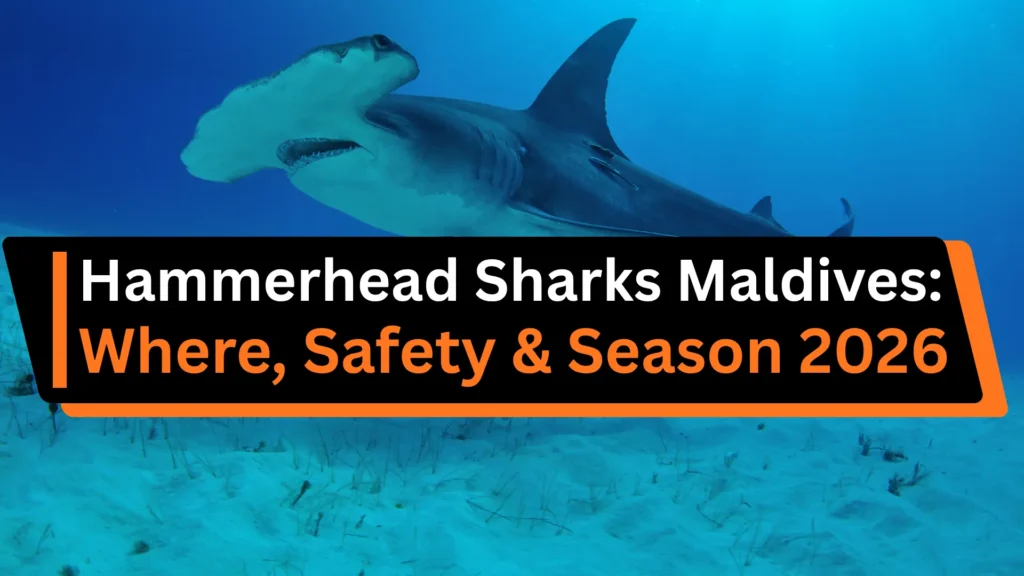
Seeing a hammerhead shark in the Maldives isn’t a matter of luck at the right dive site — it’s a matter of being in the water, in the dark, at the right depth, before sunrise. But there’s a detail most guides skip entirely: ‘hammerhead shark’ in the Maldives can mean two genuinely different encounters, at three different locations, depending on which species you’re actually hoping to see.
This guide covers both species, where to find each one, what the dive actually involves, an honest read on safety, and the best season to go.
| ✍️ “Whether it’s watching a massive, solitary Great Hammerhead cruise through the heavy currents of Fuvahmulah or sitting quietly at 30 metres in Rasdhoo waiting for Scalloped Hammerhead silhouettes to emerge at dawn, the two experiences are completely distinct in depth, scale, and energy.” |
👉 Planning a dive trip based near Malé? Compare liveaboards on liveaboards.com or resort stays on trip.com
1. Two Species, Two Very Different Encounters
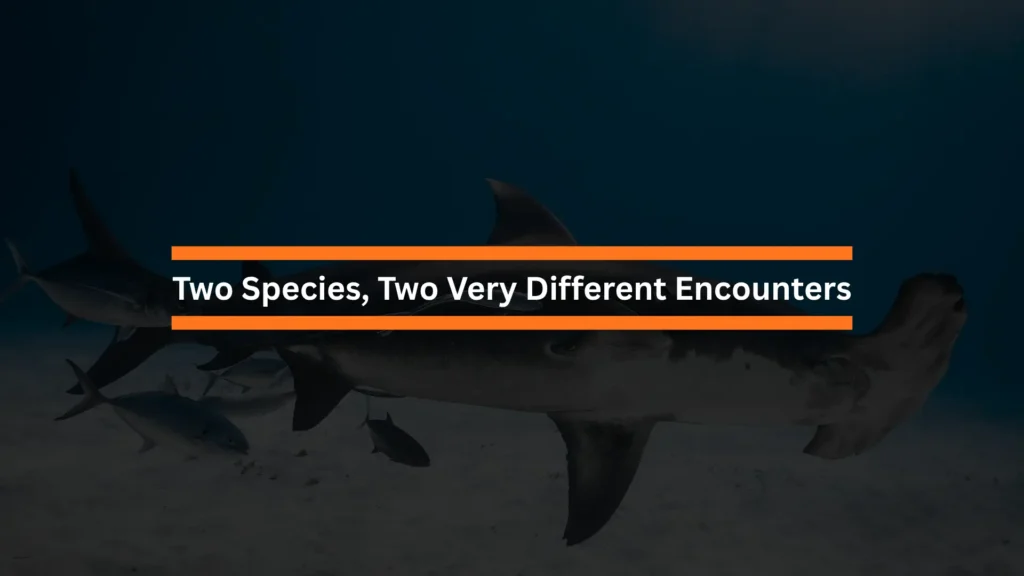
Most Maldives content lumps every hammerhead sighting together, but the two species divers actually encounter behave — and look — quite differently.
| Scalloped Hammerhead | Great Hammerhead |
| Smaller, schooling species — the shark most divers picture | Solitary, much larger species — up to 6m (20ft) long |
| Found at Rasdhoo’s Hammerhead Point and year-round in Fuvahmulah’s channels | Found at Hulhumalé’s ‘Shark Tank’ site, with occasional sightings in Fuvahmulah |
| Reliable schooling behaviour in the right season | Sightings are genuinely unpredictable, even at its known site |
| Generally regarded as harmless to divers | Caution advised given its size, though attacks on divers remain very rare |
| ⚠️ Both Species Are Endangered: Scalloped and Great Hammerhead sharks are both listed as endangered, largely due to overfishing and the shark fin trade. The Maldives banned all forms of shark fishing nationwide, which is a major reason both species are still findable here at all. |
👉 Planning a dive trip based near Malé? Compare liveaboards on liveaboards.com or resort stays on trip.com
2. Where to Dive With Hammerhead Sharks in the Maldives

| Location | Species | What to Expect |
| Rasdhoo Atoll (Hammerhead Point) | Scalloped Hammerhead | The classic pre-dawn dive; schooling sharks at a deep cleaning station |
| Fuvahmulah | Scalloped (year-round), occasional Great | Sightings reported throughout the year, alongside Fuvahmulah’s famous tiger sharks — see our Tiger Sharks Maldives guide |
| Hulhumalé (‘Shark Tank’) | Great Hammerhead | A short boat ride from Malé airport; also home to bull, lemon, and tiger sharks, but Great Hammerhead sightings here are genuinely hit-or-miss |
| ⚠️ Sightings Have Become Less Predictable: Recent diver reports and Google’s own AI summary of current search results both note that Rasdhoo hammerhead encounters are less reliable than they once were — some divers report going multiple trips without a sighting. Treat every hammerhead dive in the Maldives as a genuine wildlife encounter with real odds of missing out, not a guaranteed photo opportunity. |
| 💡 Pro Tip: If Fuvahmulah is already on your itinerary for tiger sharks (see our dedicated guide), ask your dive operator whether a hammerhead dive can be added to the same trip — you may not need a separate visit to Rasdhoo or Hulhumalé at all. |
👉 Planning a dive trip based near Malé? Compare liveaboards on liveaboards.com or resort stays on trip.com
3. The Classic Dive: Depth, Timing & Technique
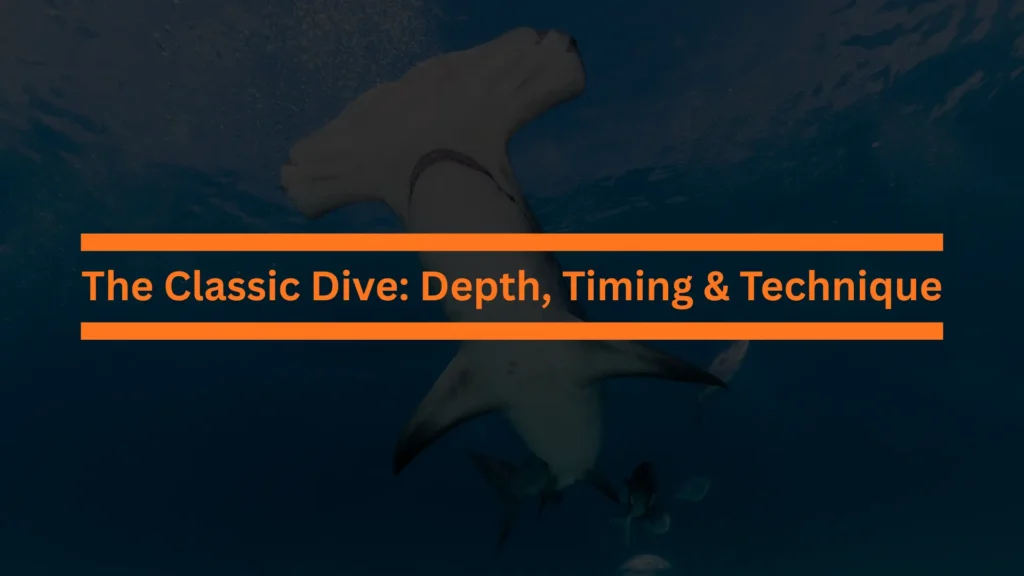
The best-documented hammerhead dive in the Maldives is still Rasdhoo’s Hammerhead Point — a dive built entirely around being in position before the sharks arrive at a deep cleaning station.
| Detail | What to Expect |
| Depth | Typically 25–40m at the cleaning stations |
| Timing | Pre-dawn departure; sharks typically encountered 6:00–8:00 AM |
| Certification | Advanced/deep diving certification strongly recommended; not a beginner dive |
| Technique | Descend in near-darkness, settle on the sandy slope, stay still and quiet as light improves |
| ⚠️ This Is an Advanced, Deep Dive: Depths of 25–40m, near-darkness descents, and conservative air management requirements mean this is genuinely suited to advanced or expert divers only. If you’re newly certified, ask your dive centre honestly whether your current experience level is a safe match before booking. |
| 💡 Pro Tip: Buoyancy control matters more here than almost any other Maldives dive. Hammerheads are notably skittish — a diver who crashes into the reef or moves suddenly will scatter the school before most of the group even gets a look. |
👉 Planning a dive trip based near Malé? Compare liveaboards on liveaboards.com or resort stays on trip.com
4. Is It Safe to Dive With Hammerhead Sharks?
Yes, in the sense that matters most to divers: hammerhead sharks are not considered a meaningful threat to humans, and attacks are extremely rare regardless of species.
🦈 Scalloped hammerheads are generally regarded as harmless to divers — their feeding behaviour targets stingrays, crabs, squid, and bony fish, not people
⚠️ Great hammerheads warrant more caution simply due to size (up to 6m), though divers who’ve encountered them consistently describe the experience as awe-inspiring rather than threatening, not aggressive
📏 Standard shark-diving etiquette applies regardless of species: no touching, no chasing, maintain distance, and follow your dive guide’s positioning instructions exactly
| ⚠️ A Separate Safety Note on Hulhumalé’s ‘Shark Tank’: Some diver reports flag that shark feeding practices at certain Hulhumalé and Fuvahmulah sites have altered shark behaviour in ways that concern experienced local divers, including at least one reported tiger shark incident. This is a site-specific operational concern, not a hammerhead-specific one — ask your dive operator directly about their feeding policy before booking any shark-focused dive in this area. |
👉 Planning a Rasdhoo, Fuvahmulah, or central atoll dive trip? Compare liveaboards on liveaboards.com or resort stays on trip.com
5. Best Time to Go

Timing depends on which location and species you’re targeting.
☀️ Rasdhoo: peak scalloped hammerhead activity during the northeast monsoon, roughly December through April, with some operators running dawn dives daily through this window
🌊 Fuvahmulah: scalloped hammerheads are reported year-round, with several sources citing October through April as the strongest window
❓ Hulhumalé: no strong seasonal pattern reported for Great Hammerhead sightings — this is closer to a year-round, low-probability encounter than a seasonal one
| 💡 Pro Tip: Because Rasdhoo’s dive is pre-dawn regardless of season, plan your trip logistics (an early night, a reliable alarm, and a dive operator known for punctual departures) as carefully as you plan the calendar month. |
👉 Planning a Rasdhoo, Fuvahmulah, or central atoll dive trip? Compare liveaboards on liveaboards.com or resort stays on trip.com
6. Is This Dive Right For You?
| Good Fit | Better Suited Elsewhere |
| Advanced or expert divers comfortable at 25–40m with strong buoyancy control | Newly certified or beginner divers still building depth and current experience |
| Divers willing to commit to a pre-dawn departure for a narrow encounter window | Divers who prefer predictable, mid-morning reef dives over specialist early starts |
| Divers who accept a real chance of no sighting as part of a genuine wildlife encounter | Divers wanting a guaranteed sighting — hammerheads at every site are seasonal and never certain |
| Divers already planning a Fuvahmulah trip who can add a hammerhead dive to the same itinerary | Divers looking for a single, isolated hammerhead dive with no interest in the wider trip |
👉 Planning a Rasdhoo, Fuvahmulah, or central atoll dive trip? Compare liveaboards on liveaboards.com or resort stays on trip.com
7. Frequently Asked Questions

Q: Is it safe to dive with hammerhead sharks?
A: Yes, generally. Hammerhead sharks — especially the more common scalloped hammerhead — are regarded as harmless to divers and attacks are extremely rare. The larger great hammerhead warrants more caution due to its size, but aggressive encounters with divers remain very uncommon.
Q: Are hammerhead sharks aggressive?
A: No, not typically. Hammerheads primarily hunt stingrays, crabs, and bony fish rather than showing interest in divers, and standard shark-diving etiquette (no touching, no chasing, maintaining distance) further minimises any risk.
Q: Where can you see hammerhead sharks in the Maldives?
A: Three main locations: Rasdhoo Atoll’s Hammerhead Point for schooling scalloped hammerheads, Fuvahmulah for scalloped hammerheads year-round alongside occasional great hammerheads, and Hulhumalé’s ‘Shark Tank’ specifically for great hammerhead sightings.
Q: When is the best time to see hammerhead sharks in the Maldives?
A: For Rasdhoo, roughly December through April. For Fuvahmulah, sightings are reported year-round with October through April cited as the strongest window. Hulhumalé’s great hammerhead sightings don’t follow a strong seasonal pattern.
Final Word
Hammerhead diving in the Maldives rewards divers who do their homework on which species, which site, and which season actually match what they’re hoping to see — this isn’t one dive, it’s three genuinely different ones wearing the same name.
Go in with realistic expectations about the odds, respect the depth and current at whichever site you choose, and the reward is one of the most striking shark encounters the Maldives offers.
Set the alarm, trust your buoyancy, and let the sharks come to you.
👉 Planning a Rasdhoo, Fuvahmulah, or central atoll dive trip? Compare liveaboards on liveaboards.com or resort stays on trip.com
Explore More