Planning a Maldives Diving Trip: The Complete Guide
Most divers spend months dreaming about the Maldives.
Then they spend weeks confused about how to actually plan it.
Liveaboard or resort? Which atoll? When to go? How much will it cost? What certification do I need?
This guide answers all of it — honestly, specifically, and in the right order.
| ✍️ When I first started researching my own Maldives diving trip, I found myself completely overwhelmed by a sea of fragmented, contradictory forum posts and generic travel blogs that left me more confused than when I started. |
By the end of this guide, you’ll have everything you need to plan a Maldives diving trip with confidence — from first decision to final booking.
Step 1 — Choose Your Diving Style: Liveaboard vs Resort
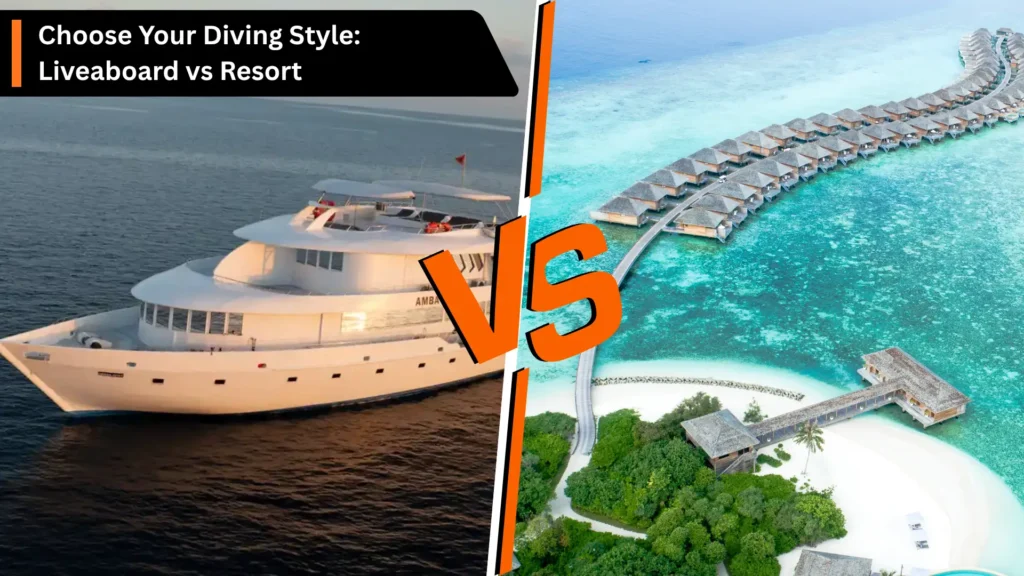
This is the first and most important decision of your trip.
Everything else — budget, atoll, season — flows from this choice.
| Step 1 | Liveaboard — The Diver’s Choice You live on the boat. You dive 3–4 times per day. Every morning you wake up above a different dive site. Access to remote atolls that resorts can’t reach. Best value for serious divers. |
| Step 2 | Dive Resort — Comfort & Flexibility Land-based diving from a resort. 2–3 dives per day. Better for non-diving partners. Limited to nearby dive sites — usually North or South Malé Atoll. More comfortable but fewer diving opportunities. |
| 🚢 Liveaboard | 🏨 Dive Resort | |
| Dives per day | 3–4 (incl. night dives) | 2–3 |
| Dive site access | Remote atolls — all Maldives | Nearby reefs only |
| Accommodation | Onboard cabin | Resort room / villa |
| Meals | All included | Usually included |
| Non-diver friendly | Limited | ✅ Excellent |
| Value for divers | ⭐ Best value | Good |
| Price per day | $150 – $600+ | $100 – $500+ |
| Big animal encounters | ⭐ Much higher | Limited |
| ✍️ For me, a liveaboard wins every single time because it gives you a profound sense of escape and absolute peace of mind—there are no long, bumpy daily boat rides to the sites; you are already there, living on the water, drifting away from the noise of the world. |
| 💡 Pro Tip: If you’re travelling with a non-diver — a resort is the practical choice. If you’re travelling with fellow divers — a liveaboard will give you a significantly better diving experience for the same or lower cost. |
“Before you book, make sure you understand the differences between a Maldives scuba diving package on a liveaboard versus one at a private resort.”
“When weighing up your accommodation, deciding between a quiet boutique island and a massive sports hub is crucial. Read our honest Kuredu Island Resort Review to see if a larger resort fits your holiday style.”

Step 2 — Pick Your Atoll & Season

The Maldives has 26 atolls. You don’t need to understand all of them.
You need to match your atoll to the marine life you most want to see — and time your visit to the right season.
Match Your Dream Encounter to the Right Atoll
- 🐋 Whale Sharks → South Ari Atoll — year-round, most reliable in the world
- 🦅 Manta Rays (mass aggregations) → Baa Atoll, Hanifaru Bay — May to November only
- 🦅 Reef Manta Rays → North Malé, Manta Point — year-round
- 🔱 Hammerhead Sharks → Lhaviyani Atoll — November to April, dawn dives
- 🦈 Tiger Sharks → Fuvahmulah Atoll, Deep South — January to March only
- 🌊 Best All-Round Diving → North Malé + Ari Atoll combined liveaboard route
- 👶 Best for Beginners → North Malé Atoll — calm conditions, iconic sites, all levels
The Two Seasons — What to Expect
| ☀️ Dry Season (Nov–Apr) | 🌧️ Wet Season (May–Oct) | |
| Visibility | 25–40m — exceptional | 15–25m — good |
| Sea conditions | Calm — ideal for all levels | Some swell — manageable |
| Manta rays | Limited | ⭐ Peak season (Baa Atoll) |
| Whale sharks | ✅ Good (Ari Atoll) | ⭐ Peak season (South Ari) |
| Prices | Higher — peak demand | Lower — better value |
| Crowds | More boats & divers | Quieter, more remote feel |
| Best for | First-timers, best conditions | Manta ray lovers, budget divers |
| 💡 Pro Tip: There is genuinely no bad time to dive the Maldives. The wet season gets a bad reputation — but experienced divers often prefer it. More current means more pelagic life. And fewer tourists means a more authentic experience. |
| 🐋 Looking for Giants? If diving with the ocean’s biggest pelagics is your main goal, make sure to read our comprehensive guide to encountering the Whale Shark in the Maldives before picking your route. |
| 🏨 Staying on land? The dry season offers the calmest seas for resort-based diving. Explore the best dive resorts and check exclusive seasonal rates on Trip.com → |
| 💰 Budget-Friendly Window: Don’t let the “wet season” scare you; it’s the absolute best time for mantas, and liveaboard prices drop significantly. Find discounted wet-season liveaboard deals here → |
Step 3 — Budget Planning: Real Numbers

The Maldives has a reputation for being expensive.
That reputation is partly deserved — and partly misunderstood.
Here are the real numbers, broken down honestly:
| Item | Budget | Mid-Range | Luxury |
| Liveaboard (7 nights) | $1,050 – $1,400 | $1,540 – $2,450 | $2,660 – $4,200+ |
| Flights (return) | $600 – $900 | $900 – $1,500 | $1,500 – $4,000+ |
| Dive Equipment Rental | $150 – $250 | $100 – $150 | Usually included |
| Nitrox (7 nights) | Often included | Often included | Included |
| Travel Insurance | $80 – $150 | $100 – $200 | $150 – $300 |
| Tips (crew) | $50 – $100 | $100 – $150 | $150 – $300 |
| Souvenirs & Extras | $50 – $100 | $100 – $200 | $200 – $500+ |
| TOTAL (7 nights) | $2,050 – $3,000 | $2,840 – $4,650 | $4,860 – $9,300+ |
| 💡 Pro Tip: The single biggest cost-saving move: travel in the wet season (May–October). Liveaboard prices drop by 20–30%, flights are cheaper, and the diving is still extraordinary. For manta ray lovers — the wet season is actually the better choice. |
| ✍️ My ultimate budget advice is simple: Book early, as the high-value mid-range boats disappear fast. Secondly, always look for packages that include Nitrox and gear rentals for free. Third, never cut corners on your dive insurance—it is a non-negotiable lifesaver. And finally, travel during the shoulder or wet season; the huge drop in prices makes the world-class diving an absolute steal. |
Step 4 — Certification Requirements
What certification do you need for the Maldives?
The honest answer: it depends on where you want to dive and what you want to see.
| Certification | Sites Accessible | Best For |
| Open Water (OW) | Most reef dives, shallow thilas, drift dives under 18m | First-time Maldives divers — North Malé routes |
| Advanced Open Water (AOW) | All sites including deeper thilas, walls to 30m, stronger currents | Recommended for most Maldives liveaboards |
| Rescue Diver | All sites — adds safety awareness for complex conditions | Serious divers on advanced routes |
| Divemaster / Instructor | All sites — no restrictions | Professional divers, technical diving routes |
| No Certification | Resort introductory dives only — max 5–8m depth | Complete beginners — taster experience only |
| 💡 Pro Tip: If you only have Open Water certification — get your Advanced Open Water before your Maldives trip. It opens up significantly better dive sites, allows deeper dives, and makes drift diving far more manageable. It takes just 2–3 days to complete. |
What if I’m Not Certified Yet?
You have two options:
- Option 1: Get certified before you go — PADI Open Water takes 3–4 days. Worth doing properly rather than rushing it.
- Option 2: Do a Discover Scuba Diving experience at a Maldives resort — no certification required, maximum depth 5–8m, dive guide stays with you at all times.
| 💡 Pro Tip: Don’t do a resort discover dive and then immediately book a liveaboard. Build some experience first. The Maldives involves drift diving and current — you’ll enjoy it far more with proper certification and at least 20–30 logged dives. |
“… Planning your first underwater adventure requires knowing your limits. If you aren’t certified yet, understanding the real timeline and costs of a Maldives diving course will help you decide whether to study before you fly or train in the lagoons.”
Step 5 — What to Pack
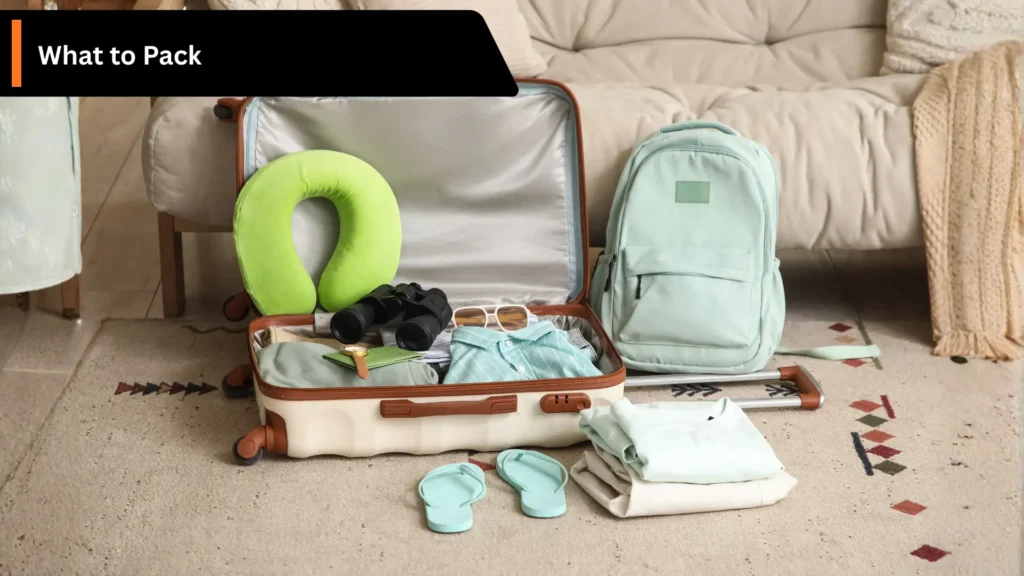
Packing for a Maldives liveaboard requires some thought — especially for your dive gear.
Here’s exactly what to bring:
🤿 Dive Gear — Essential
- Dive computer (non-negotiable — don’t rely on a rental)
- Wetsuit: 3mm full suit — perfect for Maldives year-round
- Mask and fins (personal fit is important — don’t rely on rentals)
- SMB (Surface Marker Buoy) — essential for drift dives
- Underwater torch — even if not night diving
- Dive log book
📸 Photography Gear
- Underwater camera or GoPro
- Extra memory cards and batteries
- Underwater housing (if using DSLR)
- Macro lens attachment for reef life
- Red filter for natural color at depth
👕 Clothing & Personal
- Rash guard (sun protection on the surface)
- Reef-safe sunscreen only — protect what you came to see
- Seasickness medication — some liveaboard routes can be rough
- Dry bag for electronics on the dive dhoni
- Quick-dry towels
📋 Documents & Admin
- Dive certification card (physical or digital)
- Travel insurance documents
- Passport valid for 6+ months
- Liveaboard booking confirmation
- Emergency contact information
| 💡 Pro Tip: On a liveaboard, luggage space is limited. Soft bags pack better than rigid suitcases. Many operators have a recommended soft bag size — check before you book. Priority: dive computer and personal mask. Everything else can be rented if needed. |
Step 6 — Booking Tips & Mistakes to Avoid

Most Maldives diving trips go exactly as planned. The ones that don’t usually involve one of these mistakes:
| ❌ Mistake #1: Booking Too Late |
| Problem: The best mid-range liveaboards sell out 6–12 months in advance for peak season. Many divers wait until 2–3 months before and find their first choice fully booked. ✅Solution: Book 6–9 months ahead for November–April travel. For wet season travel, 3–4 months is usually sufficient. |
| ❌ Mistake #2: Choosing the Wrong Route for Your Goals |
| Problem: Booking a North Malé liveaboard when you specifically want to see whale sharks — which are primarily in Ari Atoll. Route and marine life are directly connected. ✅Solution: Decide what you most want to see first. Then find the atoll. Then find the boat that covers that atoll. |
| ❌ Mistake #3: Skipping Travel Insurance |
| Problem: Liveaboards often require full payment upfront. If you need to cancel — for any reason — without insurance, you may lose the entire amount. ✅Solution: Book dive-specific travel insurance that covers trip cancellation, dive accidents, and emergency evacuation. World Nomads and DAN are both reliable options. |
| ❌ Mistake #4: Ignoring the Cancellation Policy |
| Problem: Many operators have strict cancellation policies — some non-refundable within 90 days of departure. Divers discover this only when they need to cancel. ✅Solution: Read the full cancellation policy before paying. If it’s unclear — ask directly before booking. |
| ❌ Mistake #5: Overpacking Dive Equipment |
| Problem: Bringing a full set of rental-quality gear when the boat already provides it — wasting valuable luggage space on a trip with strict bag limits. ✅ Solution: Bring the essentials: your own computer, mask, fins, and wetsuit. Leave the rest. Most quality liveaboards provide excellent BCDs, regulators, and tanks. |
| 💡Pro Tip: Book directly through liveaboards.com for the widest selection of boats, transparent pricing, and genuine guest reviews. It’s the most trusted booking platform for Maldives liveaboards — and you can compare availability across all operators in one place. |
Frequently Asked Questions

Q: How long should a Maldives diving trip be?
A: 7 nights is the sweet spot for a liveaboard — enough time to cover multiple atolls and experience a variety of dive sites. 10–14 nights for those who want to explore the remote southern atolls.
Q: Is the Maldives suitable for solo divers?
A: Yes — many liveaboards actively welcome solo travellers. Some boats have single cabins; others match solo divers with same-sex cabin sharers. Check the operator’s policy before booking.
Q: Do I need to speak Maldivian or any local language?
A: No. English is the universal language for diving and tourism in the Maldives. All major liveaboard operators and dive centres operate entirely in English.
Q: What is the best liveaboard booking platform?
A: liveaboards.com is the most comprehensive platform for comparing Maldives dive safari boats — with transparent pricing, verified reviews, and wide operator coverage.
Q: Can I drink alcohol in the Maldives?
A: The Maldives is a Muslim country — alcohol is not sold on local islands. However, liveaboards and resort islands are licensed to serve alcohol. Most mid-range and luxury liveaboards have a bar onboard.
Q: Is seasickness a problem on Maldives liveaboards?
A: It can be — particularly on crossing nights between atolls. Take seasickness medication preventatively if you’re susceptible. Most experienced divers find they acclimatise within 24 hours.
Q: What is the tipping etiquette on a Maldives liveaboard?
A: Tips are not mandatory but are genuinely appreciated. A common guideline is $10–15 per day for the crew, collected at the end of the trip and distributed equally. For exceptional service, more is always welcome.
Final Word
Planning a Maldives diving trip is simpler than it looks.
Decide between liveaboard and resort. Match your dream encounter to the right atoll. Book early. Get the right certification. Pack smart.
The rest — the whale sharks, the manta rays, the crystalline visibility — the Maldives handles itself.
Stop overthinking it. Just go. The ocean is waiting.
Explore More