Manta Rays in the Maldives: Where, When & Is It Safe?

There are moments underwater that stop time.
A manta ray gliding directly over you — three metres of wingspan, moving in absolute silence — is one of them.
The Maldives hosts the world’s largest known population of reef manta rays. And at Hanifaru Bay in Baa Atoll, between July and September, something happens that has no equal anywhere on earth: hundreds of oceanic mantas gather in a single bay to feed on plankton blooms — sometimes more than 200 in the water at once.
This guide covers everything — two species, six best dive sites, a month-by-month calendar, and the honest answer to whether swimming with them is actually safe.
| ✍️ To envision diving alongside manta rays is to anticipate a total suspension of gravity and noise. There is an almost cinematic quality to the way they command the water; they don’t look like they are swimming, but rather flying through a liquid sky. For me, the fascination lies in their sheer, effortless presence. Unlike sharks, which command respect through raw, predatory tension, mantas capture your focus through pure spatial poetry. It’s the thrill of knowing that an animal that massive can choose to interact with you entirely on the terms of mutual, peaceful curiosity. |
1. Two Species — Reef Manta vs Oceanic Manta
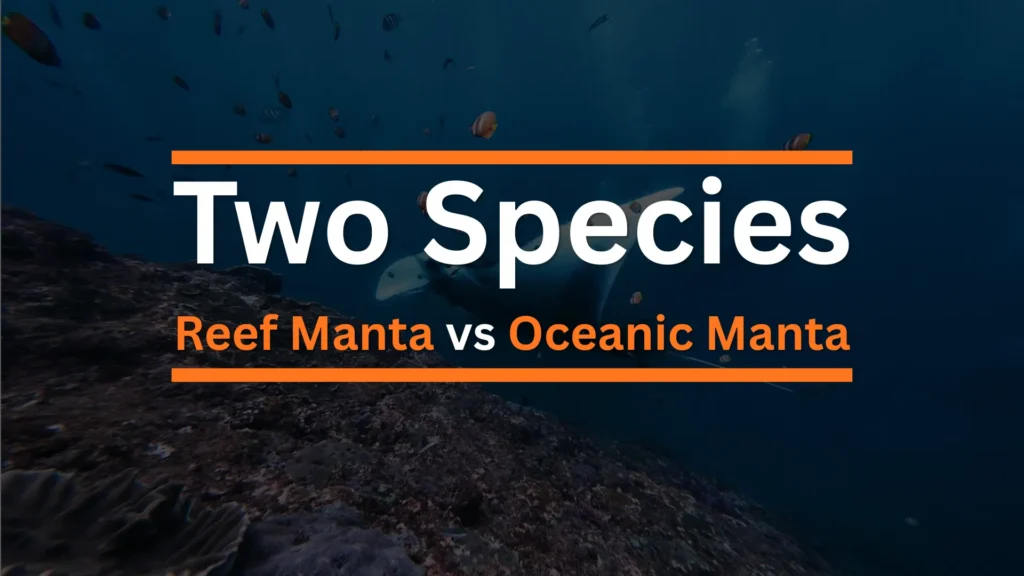
Most divers don’t realise the Maldives has two distinct manta ray species — and they behave very differently.
| 🦅 Reef Manta Ray Mobula alfredi |
| 📏 Wingspan: Up to 5.5 metres The resident species — present in the Maldives year-round. Reef mantas are smaller than oceanic mantas and more closely associated with specific cleaning stations and feeding areas. They return to the same locations repeatedly, making them highly predictable for divers. 📍 Where: North Malé Atoll (Manta Point, Lankan Finolhu), South Ari Atoll cleaning stations, Baa Atoll year-round 📅 When: Year-round — most reliable at established cleaning stations in North Malé |
| 🦅 Oceanic Manta Ray Mobula birostris |
| 📏 Wingspan: Up to 7 metres — the largest ray on earth The migratory species — arriving in the Maldives seasonally following plankton blooms. Oceanic mantas are larger, less predictable outside of aggregation sites, and responsible for the extraordinary Hanifaru Bay gatherings. A 7-metre oceanic manta in full feeding mode is one of the most spectacular sights in the ocean. 📍 Where: Deep open ocean drop-offs, passing through South Ari Atoll, Fuvahmulah, and the outer reefs of Baa Atoll (rarely enters the shallow Hanifaru Bay). 📅 When: May to November — peak aggregations July to September at Hanifaru Bay |
| 💡 Pro Tip: The easiest way to tell them apart underwater: reef mantas have distinctive spot patterns on their white belly — unique to each individual, like a fingerprint. The Maldives Manta Trust has photographed and catalogued over 3,000 individual reef mantas using these belly patterns. |
2. Manta Ray vs Stingray — Key Differences
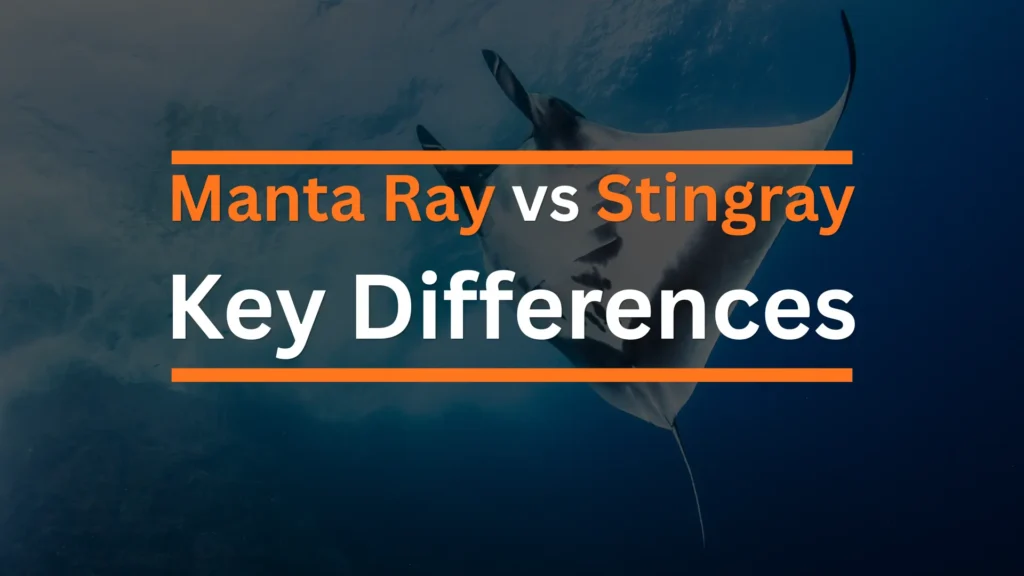
A surprisingly common question — and an important one. Manta rays and stingrays are related but very different animals.
| Feature | 🦅 Manta Ray | 🔱 Stingray |
| Size | Up to 7m wingspan | Up to 2m wingspan |
| Tail | Long, thin — no sting | Has venomous barb/sting |
| Movement | Graceful, swimming | Glides along seabed |
| Feeding | Filter feeder (plankton) | Bottom feeder (crustaceans) |
| Dangerous? | ✅ Completely safe | ⚠️ Sting if stepped on |
| Where found | Open water, cleaning stations | Sandy seabed, shallow areas |
| In Maldives | Extremely common | Common (nurse stingrays) |
| Key Fact: Manta rays have NO sting. They evolved without one. They are physically incapable of stinging, biting, or harming a diver in any way. The word ‘ray’ in their name is the only connection to stingrays. |
3. Is It Safe to Swim with Manta Rays?
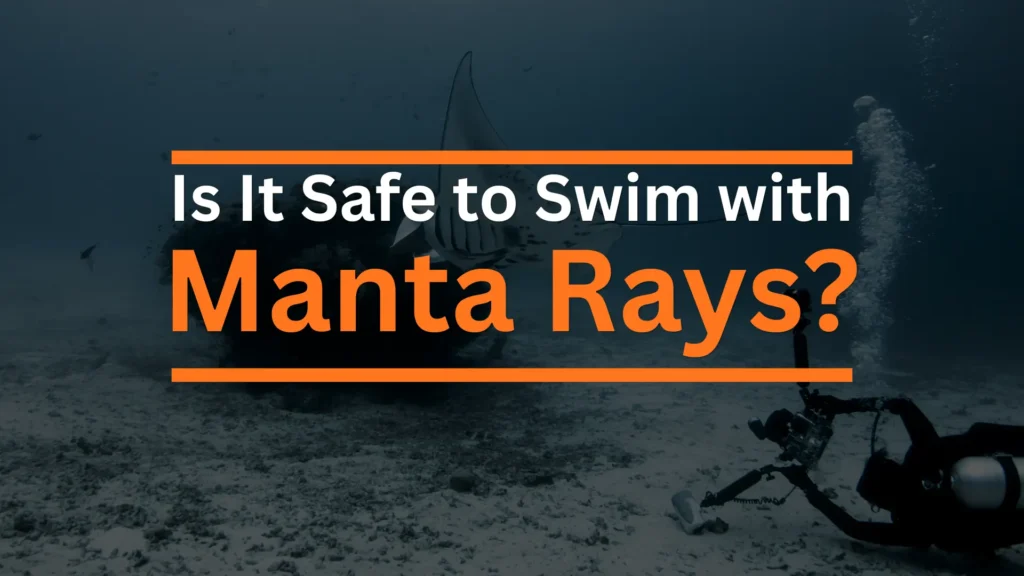
Yes. Completely.
Manta rays are filter feeders. They eat microscopic plankton. They have no teeth capable of biting, no sting, and no aggressive behaviour toward divers or swimmers.
In decades of documented encounters across the Maldives — involving millions of individual diver-manta interactions — there has never been a recorded attack on a diver.
| The only real risk: A manta ray’s wingspan. These animals are large — and moving fast in feeding mode. A diver who gets in their path could be knocked by a wing tip. This is why the 3-metre rule exists. Not because they’re dangerous — but because they’re large and fast. Stay to the side. Never directly in front of a feeding manta. And enjoy one of the most extraordinary encounters the ocean offers. |
| ✍️ Swimming with an animal of this scale triggers a beautiful, chaotic mix of raw adrenaline and sudden, profound calmness. When a 5-metre shadow detaches from the blue and comes straight toward you, your survival instinct wants to call it fear. But the moment you look into their wide, intelligent eyes and witness the absolute grace of their movement, that fear instantly dissolves into pure, jaw-dropping exhilaration. It is a humbling reminder of how small we are, yet how welcome we can be in their wild, untouched world. |
4. Best Dive Sites for Manta Rays in the Maldives
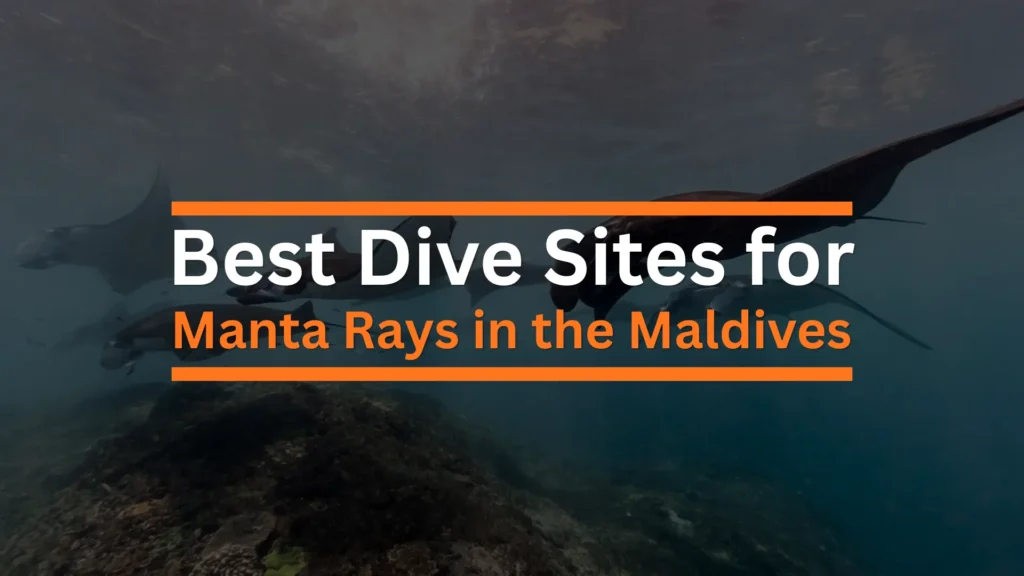
| 📍 Hanifaru Bay Baa Atoll — UNESCO Biosphere Reserve | Depth: 2–12m | Level: All levels (snorkeling only ) |
| The most famous manta ray aggregation site on earth. A protected, funnel-shaped bay in Baa Atoll where reef manta rays gather in extraordinary numbers during the southwest monsoon. At peak season (July–October), you can witness a feeding frenzy of 200+ mantas simultaneously in a space no larger than a football pitch. 🚨 Strict Regulation Notice: Scuba diving is strictly banned inside Hanifaru Bay all year round to prevent bubbles from disrupting the mantas’ feeding behavior. Snorkeling is the only legal way to experience this spectacle, and it is highly regulated with mandatory park rangers on site. 💡 Insider Tip: Don’t be disappointed by the lack of tanks. Because reef mantas feed right at the surface on thick plankton soup, being on snorkel puts you directly eye-to-eye with the action, unobstructed by heavy dive gear. |
🚢 Want to witness the Hanifaru feeding frenzy? Most central atoll itineraries stop here during the season. Compare Baa Atoll Liveaboard Itineraries on Liveaboards.com
| 📍 Manta Point (Lankan Finolhu) North Malé Atoll | Depth: 10–20m | Level: All levels |
| The most reliable year-round manta ray dive site in the Maldives. A cleaning station where reef mantas hover motionless while small wrasse remove parasites from their gills. Encounters here are calm, close, and extraordinarily intimate — mantas hovering within arm’s reach (don’t touch) while completely at ease with divers. 💡 Dive on an incoming tide — when current brings plankton-rich water over the cleaning station. Ask your guide to time the dive accordingly. Patience is rewarded: mantas that aren’t disturbed often stay for 20–30 minutes. |
🏨 Looking to stay near Manta Point? Check out the best dive-resorts in North Malé Atoll on Trip.com.
| 📍 Dhonfanu Thila Baa Atoll | Depth: 10–25m | Level: Intermediate |
| A beautiful coral thila in Baa Atoll with resident reef mantas and excellent year-round encounters. Less crowded than Hanifaru Bay — and diving is permitted year-round. The combination of thila diving and reliable manta encounters makes this one of the best all-round dives in Baa Atoll. 💡 Best combined with Hanifaru Bay on the same day — morning dive at Dhonfanu, afternoon snorkel at Hanifaru during peak season. A perfectly structured Baa Atoll manta day. |
| 📍 Horubadhoo Thila Baa Atoll | Depth: 12–28m | Level: Intermediate |
| Famous for its cleaning stations where mantas hover motionless while being cleaned. The diving here feels more personal than Hanifaru — fewer divers, closer encounters, and the thila itself is beautifully covered in coral. Reef mantas are resident here year-round. 💡 Look for the cleaning stations on the shallower sections of the thila (10–15m). Mantas attending cleaning stations are completely focused on the cleaning process — making for extraordinarily close, calm encounters. |
| 📍 Fish Head (Mushimasmingili Thila) South Ari Atoll | Depth: 10–30m | Level: Intermediate |
| Primarily famous for grey reef sharks and whale sharks — but manta ray sightings are a regular bonus here. The nutrient-rich currents that attract whale sharks also attract passing mantas. A South Ari manta encounter here, alongside whale sharks and reef sharks, is one of the most extraordinary multi-species dives in the Maldives. 💡 Don’t come specifically for mantas — but don’t be surprised when one glides through mid-dive. The overall marine life density at Fish Head is extraordinary regardless. |
To see how northern routes integrate snorkel-only trips, check our Spirit of Maldives itinerary guide
| 📍 Velassaru Caves South Malé Atoll | Depth: 5–25m | Level: All levels |
| A lesser-known manta ray site in South Malé Atoll with resident reef mantas and a beautifully structured reef. Less visited than the Baa and North Malé sites — making encounters here feel genuinely exclusive. 💡 Ask your liveaboard guide specifically about manta ray sightings in South Malé. Local knowledge makes an enormous difference — experienced guides know exactly where the cleaning stations are and which tides produce the best encounters. |
“… While Hanifaru Bay steals the spotlight for surface encounters, the surrounding waters are packed with pristine underwater pinnacles. To maximize your time in this UNESCO reserve, you should explore the full logistics of Baa Atoll diving to map out your entire underwater itinerary.”
5. Hanifaru Bay — The Greatest Manta Spectacle on Earth

There is nowhere else on earth quite like Hanifaru Bay during peak season.
The bay itself is small — roughly the size of a football pitch. During the southwest monsoon (July–September), plankton blooms in the warm current create a feeding frenzy that draws oceanic mantas from across the Maldives.
On peak days — typically July and August — more than 200 mantas have been recorded feeding simultaneously in this single bay.
What Happens at Hanifaru Bay
- 🌊 The southwest monsoon pushes plankton-rich water into the bay
- 🦅 Oceanic mantas arrive individually, then in groups
- 🔄 In peak feeding: mantas form ‘cyclone’ feeding formations — spinning in tight spirals to concentrate plankton
- 🤿 Divers and snorkelers watch from the edges — overwhelmed
- ⏱️ Peak encounters last 30 minutes to several hours
| ⚠️ Hanifaru Bay Rules — Non-Negotiable: During peak season (July–October): SNORKELING ONLY. No scuba diving permitted inside the bay. This is strictly enforced by Maldives National Park rangers present at the site. Outside peak season (November–June): Diving permitted with a limited number of divers. Confirm current rules with your operator before visiting. |
| 💡 Pro Tip: The snorkeling experience at Hanifaru Bay during peak season is genuinely more spectacular than diving would be. The mantas feed at the surface — which is exactly where snorkelers are. You’re in the middle of the action, not looking up at it from below. First-time Maldives visitors often say Hanifaru was the single greatest wildlife encounter of their lives. |
6. Month-by-Month Manta Ray Calendar

| Month | Reef Mantas | Oceanic Mantas | Hanifaru Bay | Best Location |
| January | ✅ Year-round | ⚠️ Occasional | ❌ Closed season | North Malé — Manta Point |
| February | ✅ Year-round | ⚠️ Occasional | ❌ Closed season | North Malé — Manta Point |
| March | ✅ Year-round | ⚠️ Building | ❌ Closed season | North Malé + Ari Atoll |
| April | ✅ Year-round | ✅ Arriving | ⚠️ Pre-season | Multiple atolls |
| May | ✅ Year-round | ✅ Good | ✅ Season opens | Baa Atoll — Hanifaru |
| June | ✅ Year-round | ✅ Very good | ✅ Building | Baa Atoll — Hanifaru |
| July | ✅ Year-round | ⭐ Peak | ⭐ Peak season | Baa Atoll — Hanifaru |
| August | ✅ Year-round | ⭐ Peak | ⭐ Peak season | Baa Atoll — Hanifaru |
| September | ✅ Year-round | ⭐ Peak | ⭐ Peak season | Baa Atoll — Hanifaru |
| October | ✅ Year-round | ✅ Good | ✅ Winding down | Baa Atoll + South Ari |
| November | ✅ Year-round | ⚠️ Reducing | ❌ Season ends | North Malé — Manta Point |
| December | ✅ Year-round | ⚠️ Occasional | ❌ Closed season | North Malé — Manta Point |
📅 Planning a trip during the peak Manta season (July–October)? Spaces on boats and eco-resorts fill up fast. Check live availability and special deals for 2026 here →
⭐ Peak ✅ Good ⚠️ Limited ❌ Not available
7. How Many Manta Rays Are in the Maldives?
The numbers are extraordinary — and surprisingly well-documented.
- 🦅 3,000+ individual reef manta rays have been photo-identified and catalogued by the Maldives Manta Trust
- 🦅 Over 20,000 individual sightings recorded across the Maldives in the past 10 years
- 🦅 2,800+ individual mantas recorded throughout Maldivian waters
- 🦅 The Maldives hosts the largest known population of reef manta rays on earth
- 🦅 Hanifaru Bay aggregations can exceed 200 oceanic mantas simultaneously — the largest known manta aggregation site in the world
| 💡Pro Tip: The Maldives Manta Trust (maldivesmantatrust.org) does remarkable conservation work. Many liveaboards carry citizen science protocols — divers can contribute their underwater photos of manta belly patterns to help catalogue the population. Ask your dive guide how to participate. |
8. Manta Ray Conservation — Why It Matters
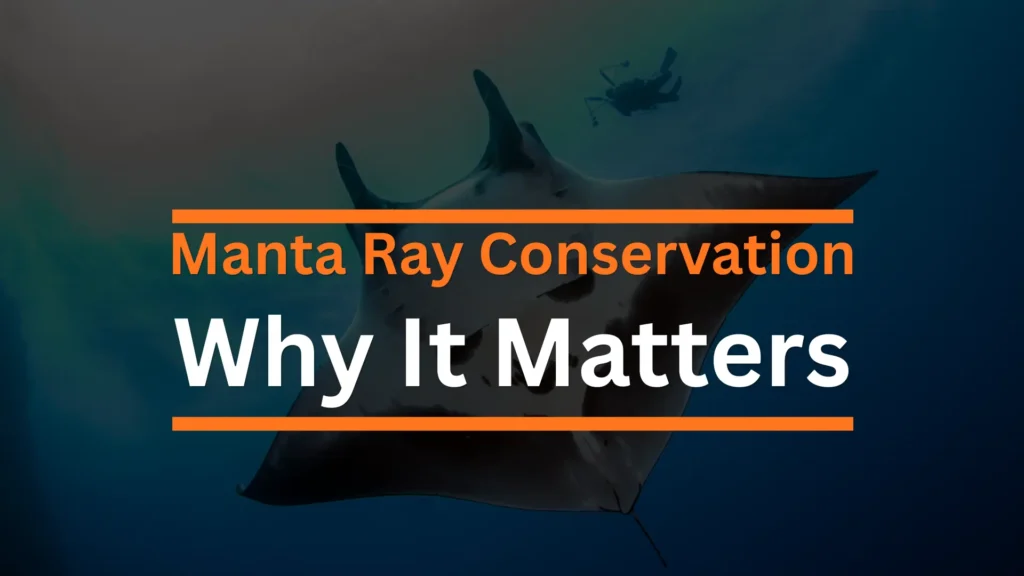
Manta rays are classified as Vulnerable on the IUCN Red List. They face threats from entanglement, boat strikes, and demand for their gill plates in traditional medicine.
The Maldives is one of the few places in the world where manta ray populations are genuinely protected and stable — largely because of strong marine protection laws and responsible dive tourism.
- ✅ Manta rays have been fully protected in the Maldives since 1995
- ✅ Hanifaru Bay is a UNESCO Biosphere Reserve — strictly protected
- ✅ The Maldives Manta Trust runs ongoing research and conservation programmes
- ✅ Responsible dive tourism directly funds conservation — your visit contributes
- ⚠️ Never touch, chase, or disturb manta rays — stress affects their feeding and cleaning behaviour
- ⚠️ Report any entangled or injured mantas to your dive guide or the Maldives Manta Trust immediately
9. Do’s & Don’ts — How to Behave Around Manta Rays
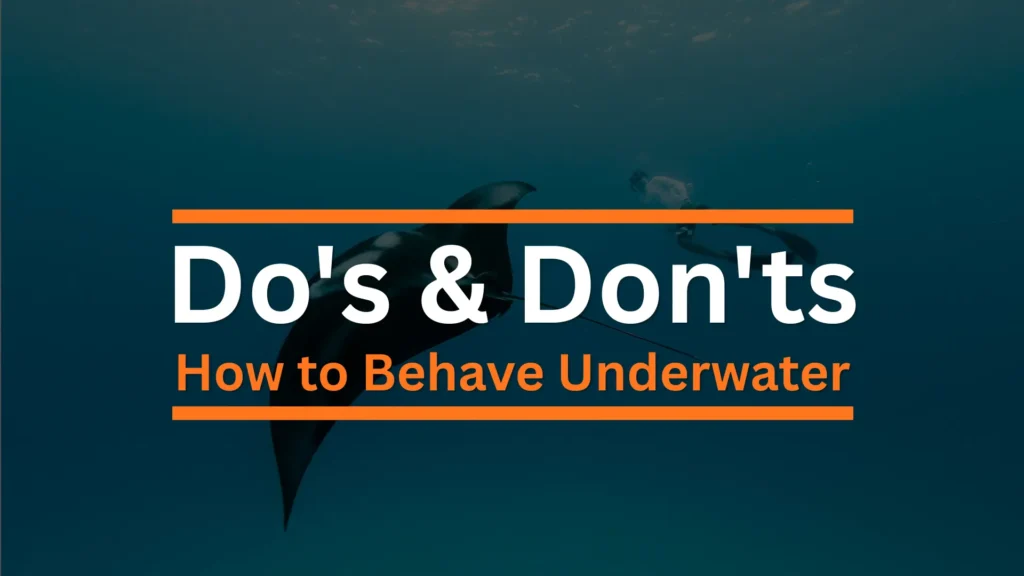
The quality of your manta ray encounter depends almost entirely on your own behaviour. Follow these guidelines — and the mantas will come to you.
| ✅ DO | ❌ DON’T |
| ✅ Stay calm and move slowly | ❌ Never touch or chase |
| ✅ Approach from the side — never from above | ❌ Never approach from directly above |
| ✅ Keep a 3-metre distance minimum | ❌ Never use flash photography |
| ✅ Turn off underwater flash/strobes | ❌ Never block the manta’s path |
| ✅ Let the manta set the pace | ❌ Never make sudden movements |
| ✅ Stay neutrally buoyant | ❌ Never separate from your guide |
| ✅ At Hanifaru Bay — snorkel only (peak season) | ❌ Never dive in Hanifaru during peak season |
| 💡 Pro Tip: The best manta encounters happen when divers stop trying to control the situation. Float still, breathe slowly, and wait. A manta ray that feels unthreatened will often circle back and approach of its own curiosity — gliding within metres of a completely motionless diver. Patience is everything. |
🚢 Want to witness the Hanifaru feeding frenzy? Most central atoll itineraries stop here during the season. Compare Baa Atoll Liveaboard Itineraries on Liveaboards.com

📅 Planning a trip during the peak Manta season (July–October)? Spaces on boats and eco-resorts fill up fast. Check live availability and special deals for 2026 here →

10. Frequently Asked Questions

Q: Can you see manta rays in the Maldives?
A: Yes — the Maldives hosts the world’s largest known population of reef manta rays. Encounters are possible year-round at cleaning stations in North Malé Atoll, with peak oceanic manta aggregations at Hanifaru Bay in Baa Atoll from July to September.
Q: Are manta rays common in the Maldives?
A: Extremely common. Over 3,000 individual reef mantas have been catalogued in Maldivian waters, and the Maldives hosts the largest known manta ray population on earth. Year-round encounters are almost guaranteed for divers using a knowledgeable guide.
Q: What time of year are manta rays in the Maldives?
A: Reef manta rays are present year-round at cleaning stations — most reliably at Manta Point in North Malé Atoll. Oceanic mantas gather at Hanifaru Bay in Baa Atoll from May to November, with peak aggregations July to September.
Q: Is swimming with manta rays risky?
A: No — manta rays have no sting, no teeth capable of biting, and no aggressive behaviour toward humans. They are filter feeders that eat plankton. In millions of documented diver-manta encounters in the Maldives, there has never been a recorded attack. The only precaution: maintain 3 metres distance to avoid being accidentally struck by a wing tip.
Q: What is the difference between a manta ray and a stingray?
A: Completely different animals. Manta rays are large filter feeders with no sting — completely harmless. Stingrays are smaller bottom-feeders with a venomous barb. In the Maldives, you’ll encounter reef mantas and oceanic mantas (harmless, extraordinary) and nurse stingrays (mild-mannered bottom dwellers, only dangerous if stepped on).
Q: How many types of manta rays are in the Maldives?
A: Two species: the reef manta ray (Mobula alfredi) — resident year-round, up to 5.5m wingspan — and the oceanic manta ray (Mobula birostris) — migratory, up to 7m wingspan, responsible for the Hanifaru Bay aggregations.
Q: Can I snorkel with manta rays at Hanifaru Bay?
A: Yes — and during peak season (July–October), snorkeling is actually the only option permitted inside the bay. Diving is restricted to protect the feeding mantas. The snorkeling experience is extraordinary — mantas feed at the surface, placing snorkelers directly in the action.
Q: What is manta ray snorkeling in the Maldives like?
A: At Hanifaru Bay during peak season — genuinely overwhelming. Hundreds of mantas, some with wingspans approaching 7 metres, gliding within metres of snorkelers in shallow, clear water. Many visitors describe it as the single greatest wildlife experience of their lives. Nothing prepares you for the scale of it.
Final Word
Manta rays are the reason many divers return to the Maldives year after year.
Not because encounters are rare — but because they never get ordinary.
A manta ray hovering at a cleaning station while tiny wrasse tend to its gills. Two hundred oceanic mantas in cyclone formation at Hanifaru Bay. A lone reef manta gliding past on a night dive, backlit by bioluminescence.
These are the encounters that make the Maldives what it is.
Hanifaru Bay is waiting. So are the mantas.
Explore More