Baa Atoll Diving: Mantas, Hanifaru Bay & Top Sites
There is one reason most divers go to Baa Atoll.
Hanifaru Bay.
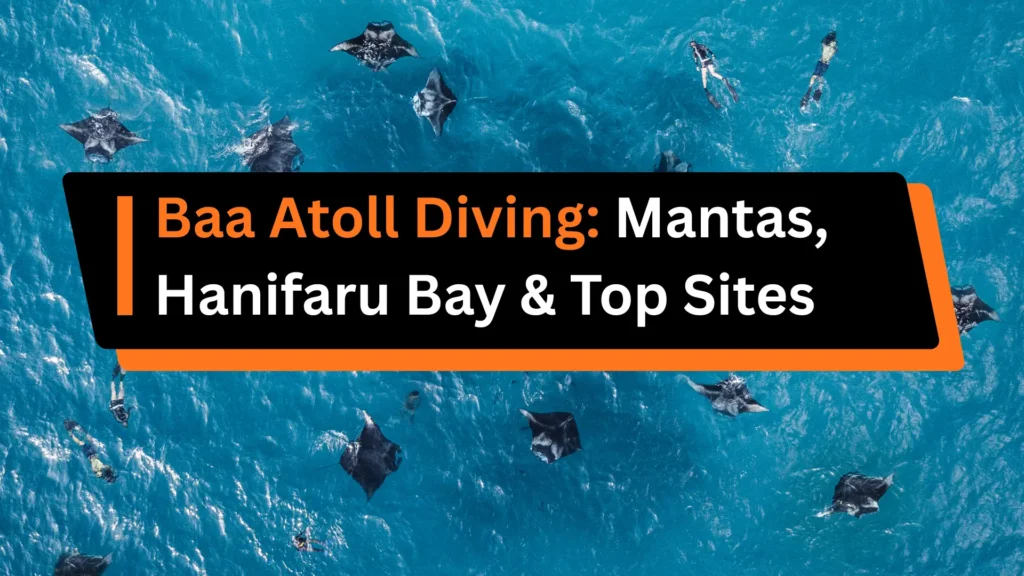
A small, protected bay in this UNESCO Biosphere Reserve where reef manta rays gather in extraordinary numbers during the southwest monsoon — sometimes more than 200 simultaneously in a single bay, feeding on plankton blooms in spiralling cyclone formations.
But Baa Atoll is more than Hanifaru. Over 100 coral reefs, pristine thilas, mangrove forests, and some of the healthiest reef systems in the Maldives.
This guide covers all of it — the best dive sites, the accurate season, how to access Hanifaru Bay, and the honest comparison with Ari Atoll.
| ✍️ What makes Baa Atoll utterly intoxicating isn’t just the raw numbers of marine life; it’s the profound sense of sanctuary. In a world where premium dive destinations often feel overcrowded, Baa retains an almost sacred, untouched calm. The combination of strict UNESCO protections and pristine, intact thilas creates an underwater amphitheater where you feel less like a tourist and more like a privileged guest. It’s the ultimate contrast—the serene stillness of the atoll’s exclusive resorts paired with the high-octane, breathtaking chaos of hundreds of mantas dancing just beneath the surface. |
1. Baa Atoll Overview — Why It’s UNESCO Protected

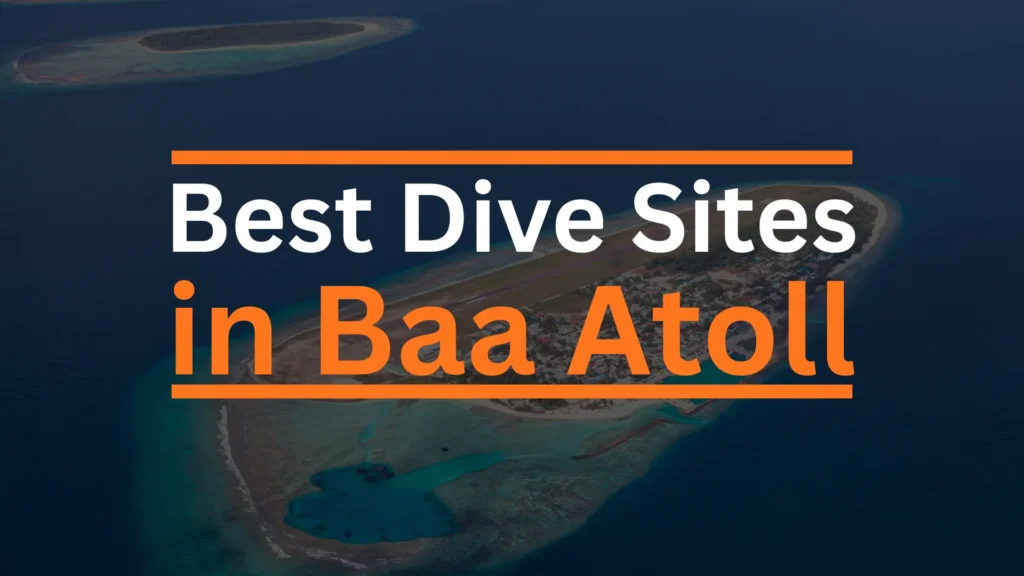
Baa Atoll — officially the South Maalhosmadulu Atoll — sits approximately 120km north of Malé in the northern Maldives.
In 2011, it was designated a UNESCO World Biosphere Reserve — one of only a handful of marine areas in the world to receive this status. The designation reflects the extraordinary biodiversity of the atoll’s coral reef systems.
- 🏝️ 75 islands — 13 inhabited, 62 uninhabited
- 🪸 Over 100 coral reefs — among the most intact in the Maldives
- 🦅 World’s largest known reef manta ray aggregation at Hanifaru Bay
- 🐋 Whale sharks present — less reliable than Ari Atoll but occasional sightings
- 🦈 Grey reef sharks, nurse sharks, eagle rays year-round
- 🌿 Mangrove forests — rare in the Maldives and ecologically vital
- 📸 Exceptional underwater photography — pristine coral, extraordinary marine life density
| 💡 Pro Tip: The UNESCO Biosphere Reserve status means Baa Atoll has stricter environmental protections than most Maldives atolls. This is why the reefs here are in such exceptional condition — and why Hanifaru Bay’s rules (snorkeling only, ranger presence) are strictly enforced. |
2. Baa Atoll vs Ari Atoll — Which Should You Choose?
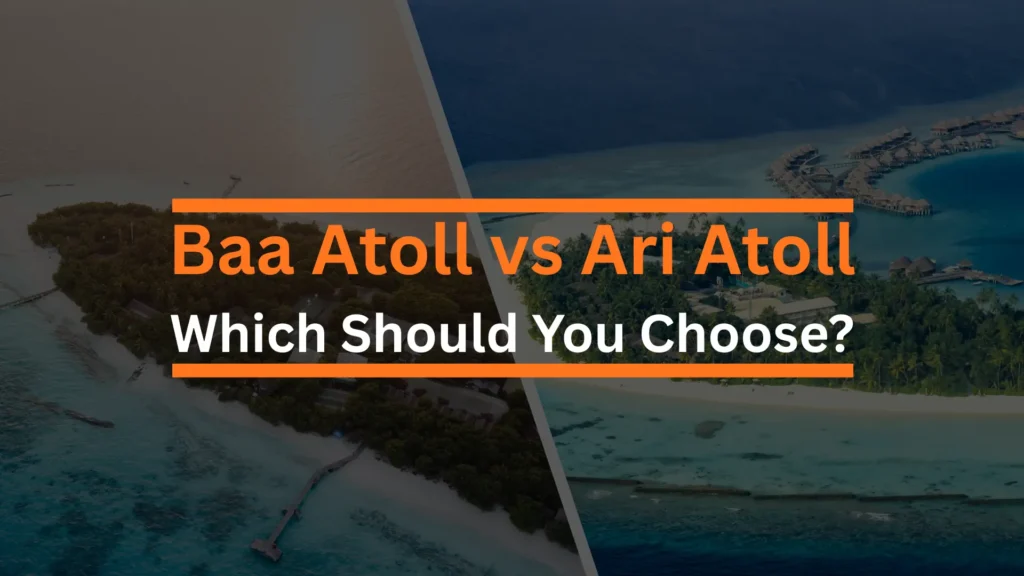
This is the question most serious Maldives divers ask. Here’s the honest answer:
| 🔵 Baa Atoll | 🟢 Ari Atoll | |
| Signature Species | ⭐ Reef Manta Rays | ⭐ Whale Sharks |
| Hanifaru Bay | ✅ Yes — unique to Baa | ❌ Not here |
| Whale Sharks | ⚠️ Occasional only | ⭐ Year-round reliable |
| Reef Diversity | ⭐ UNESCO protected | ✅ Very good |
| Best Season | June–November (mantas) | Year-round (whale sharks) |
| Accessibility | Seaplane or speedboat | Speedboat or seaplane |
| Crowds | Peak season — busy | Moderate year-round |
| Best For | Manta ray specialists | Whale shark specialists |
| Liveaboard Routes | ✅ Baa + Raa combined | ✅ North + South Ari |
| The Verdict: If manta rays are your priority — go to Baa Atoll between June and November. If whale sharks are your priority — go to Ari Atoll year-round. The ideal Maldives liveaboard covers both — combining Baa Atoll’s Hanifaru Bay with Ari Atoll’s whale shark sites in a single route. |
| 🚢 Pro Tip for Divers: Can’t decide between the two? You don’t have to. Most central Maldives liveaboards cover both atolls in a single week. Compare top-rated Baa & Ari Atoll liveaboard routes here |
| ✍️ If forced to choose, my heart splits down the middle, but Baa Atoll wins on pure visual composition. Ari Atoll is undeniably spectacular for year-round, heavy-hitting pelagic action with whale sharks. However, Baa Atoll offers an elite, highly curated wildlife spectacle that you cannot replicate anywhere else on the planet. The sheer aesthetic beauty of a manta cyclone in Hanifaru Bay, set against the backdrop of some of the healthiest reefs in the Maldives, delivers a visual impact that alters you as a diver forever. For an unforgettable seasonal trip, Baa is the masterpiece. |
3. Best Dive Sites in Baa Atoll
| 📍 Hanifaru Bay Baa Atoll UNESCO Biosphere Reserve | Depth: 5–15m | Level: Snorkeling ONLY — year-round ban on scuba |
| The world’s most famous manta ray aggregation site. A protected bay where reef manta rays gather in extraordinary numbers during the southwest monsoon (June–November) to feed on plankton blooms. At peak season (July–October), 200+ mantas simultaneously in a single bay — the greatest manta spectacle on earth. ⚠️ Scuba diving is permanently banned year-round. Snorkeling only, under strict ranger supervision. 🦈 Marine Life: Reef manta rays (200+ at peak), occasional whale sharks, reef fish 💡 Book Hanifaru Bay access through your liveaboard or resort — entry is managed and numbers are strictly controlled by Maldives National Park rangers. 🤿 Planning to visit Hanifaru? Spaces on boats with confirmed park permits fill up months in advance during the manta season. Check live boat availability for Baa Atoll here → |
| 📍 Dhonfanu Thila Baa Atoll | Depth: 10–25m | Level: Intermediate |
| A beautifully structured coral thila with resident reef mantas year-round. The best scuba diving manta site in Baa Atoll — because Hanifaru Bay itself doesn’t permit diving. Dhonfanu offers intimate manta encounters at cleaning stations alongside exceptional thila diving. 🦈 Marine Life: Resident reef manta rays year-round, grey reef sharks, eagle rays, Napoleon wrasse, colourful soft corals 💡 Best combined with a Hanifaru Bay snorkel on the same day — morning scuba at Dhonfanu, afternoon snorkel at Hanifaru. The perfect Baa Atoll manta day. |
| 📍 Horubadhoo Thila Baa Atoll | Depth: 12–28m | Level: Intermediate |
| Famous for its cleaning stations where reef mantas hover motionless while being cleaned by small wrasse. The encounters here are exceptionally intimate — fewer divers than Hanifaru, and mantas focused entirely on cleaning rather than feeding. 🦈 Marine Life: Resident reef manta rays, reef sharks, eagle rays, rich soft coral coverage 💡 Look for the cleaning stations on the shallower sections at 10–15m. Mantas attending cleaning stations are completely at ease — some of the most prolonged, intimate manta encounters in the Maldives happen here. |
| 📍 Nelivaru Thila Baa Atoll | Depth: 8–25m | Level: Intermediate |
| One of the finest thilas in Baa Atoll — less visited than the main manta sites but exceptional for reef life quality. Pristine coral formations, schooling fish in enormous numbers, and regular grey reef shark sightings make this a highlight of any Baa Atoll liveaboard route. 🦈 Marine Life: Grey reef sharks, Napoleon wrasse, schooling fusiliers, turtles, eagle rays, pristine hard corals 💡 Ask your dive guide specifically about Nelivaru — less experienced guides sometimes skip it in favour of the more famous manta sites. Don’t let them. The reef quality here is outstanding. |
| 📍 Kihaadhoo Thila Baa Atoll | Depth: 10–30m | Level: Intermediate–Advanced |
| A deeper thila with strong current action and impressive pelagic life. The currents that make this dive more challenging are also what attract the larger animals — eagle rays, occasional hammerheads, and impressive schools of barracuda. 🦈 Marine Life: Eagle rays, grey reef sharks, barracuda schools, hammerheads (occasional), large groupers 💡 Best dived on an incoming current — when the marine life gathers on the up-current side of the thila. Confirm current direction and timing with your dive guide before entering. |
| 📍 Dharavandhoo Thila Baa Atoll — near Dharavandhoo island | Depth: 8–25m | Level: All levels |
| One of the most accessible thilas in Baa Atoll and a favourite with the local dive centres. Exceptional coral health, resident turtles, and a wide variety of reef life make this an ideal dive for all levels — particularly good for underwater photographers. 🦈 Marine Life: Hawksbill turtles, diverse reef fish, nurse sharks resting in crevices, nudibranchs, colourful soft corals 💡 The local dive centres based in Dharavandhoo know this thila intimately — their guides will take you directly to the best coral sections and resident turtle sleeping spots. 🏨 Want to dive Dharavandhoo on a budget? Explore the best local guesthouses and dive shops on Trip.com → |
4. Hanifaru Bay — The Full Story

No dive guide to Baa Atoll is complete without a proper explanation of Hanifaru Bay — and the rules that apply to visiting it.
What Makes Hanifaru Bay Unique
During the southwest monsoon (June–November), nutrient-rich currents push concentrated plankton blooms into the enclosed bay. Reef manta rays — which are resident in Baa Atoll year-round — gather to feed on these blooms in extraordinary numbers.
At peak aggregation (July–October), more than 200 reef manta rays have been recorded feeding simultaneously in the bay — often in cyclone feeding formations where mantas spiral in tight circles to concentrate plankton.
There is nothing else like it on earth.
| ⚠️ Hanifaru Bay — Permanent Scuba Diving Ban Scuba diving (using tanks) is permanently and completely prohibited at Hanifaru Bay year-round. This is not a seasonal restriction — it is a permanent ban enforced by Maldives National Park rangers present at the site at all times during visiting hours. Any dive operator suggesting otherwise is misinformed. Snorkeling only — under strict supervision, with limited daily visitor numbers. |
How to Visit Hanifaru Bay
- ✅ Snorkeling only — no scuba diving permitted at any time of year
- ✅ Entry via permit only — managed by Maldives National Park
- ✅ Daily visitor numbers are strictly limited
- ✅ Rangers present at all times during visits
- ✅ Access via your liveaboard or resort — they arrange permits
- ⚠️ Peak season visits (July–October) should be booked well in advance
- ⚠️ No touching, feeding, or chasing mantas — strictly enforced
| 💡 Pro Tip: For scuba divers who want to dive with mantas — Dhonfanu Thila and Horubadhoo Thila in Baa Atoll offer excellent manta encounters with tanks permitted. Plan a morning scuba dive at Dhonfanu, then a snorkel at Hanifaru in the afternoon. The two experiences complement each other perfectly. |
5. Month-by-Month Season Calendar

Here’s the accurate seasonal breakdown for Baa Atoll diving in 2026:
| Month | Manta Rays | Whale Sharks | Visibility | Conditions | Overall |
| January | ✅ Resident mantas | ⚠️ Occasional | 30m+ | Dry season — excellent | ✅ Very Good |
| February | ✅ Resident mantas | ⚠️ Occasional | 30m+ | Peak dry season | ✅ Very Good |
| March | ✅ Resident mantas | ⚠️ Occasional | 25–30m | Dry season | ✅ Very Good |
| April | ✅ Resident mantas | ⚠️ Occasional | 20–25m | Transitional | 👍 Good |
| May | ✅ Resident mantas | ⚠️ Occasional | 15–20m | Pre-season — variable | 👍 Good |
| June | ⭐ Hanifaru opens | ⚠️ Occasional | 15–20m | Wet season begins | ⭐ Excellent |
| July | ⭐ Hanifaru peak | ⚠️ Occasional | 15–20m | Wet season | ⭐ Excellent |
| August | ⭐ Hanifaru peak | ⚠️ Occasional | 15–20m | Wet season | ⭐ Excellent |
| September | ⭐ Hanifaru peak | ⚠️ Occasional | 15–20m | Wet season | ⭐ Excellent |
| October | ⭐ Hanifaru strong | ⚠️ Occasional | 20–25m | Transitional | ⭐ Excellent |
| November | ✅ Hanifaru ending | ⚠️ Occasional | 25–30m | Dry season returns | ✅ Very Good |
| December | ✅ Resident mantas | ⚠️ Occasional | 30m+ | Peak dry season | ✅ Very Good |
⭐ Peak ✅ Good ⚠️ Limited / Occasional
| 📅 Ready to catch the peak manta season? Click here to book your 2026 Baa Atoll diving trip and unlock exclusive early-bird deals → |
| 💡 Pro Tip: June to November is the prime season for Baa Atoll. The wet season (southwest monsoon) that most guides warn against is actually what creates the Hanifaru Bay aggregations. Visibility drops to 15–20m but the manta encounters more than compensate. Liveaboard prices also drop 20–30% during this period. |
6. Are There Whale Sharks in Baa Atoll?
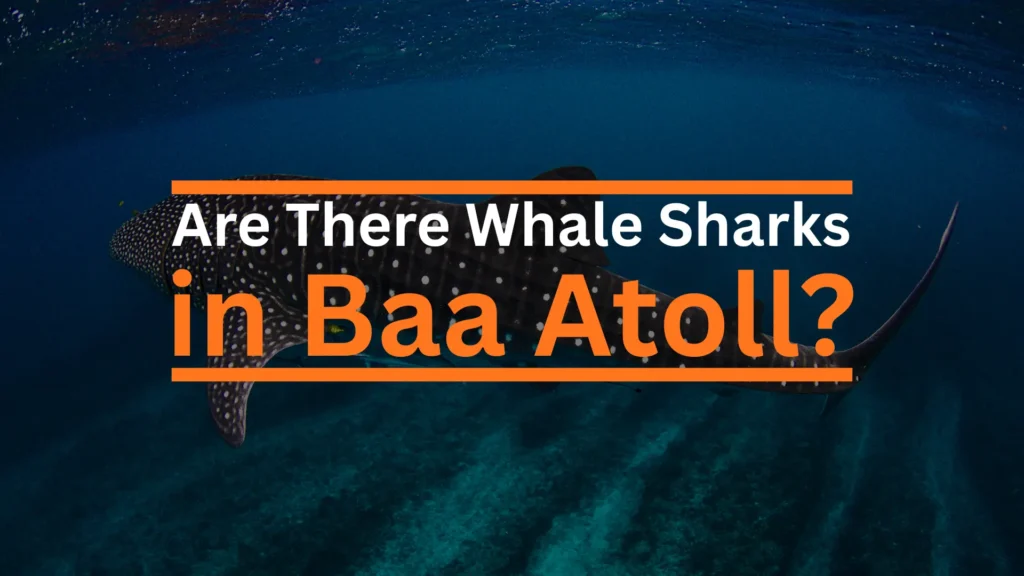
This question comes up constantly — and the honest answer is: occasionally, but don’t plan your trip around it.
Whale sharks do pass through Baa Atoll — particularly around the outer reefs and channels. But sightings are inconsistent and cannot be relied upon the way they can in Ari Atoll.
| Baa Atoll Whale Sharks | Ari Atoll Whale Sharks |
| ⚠️ Occasional — unpredictable. Don’t plan your trip around whale sharks in Baa Atoll. | ⭐ Year-round reliable — the world’s most consistent whale shark site. Plan your trip around Ari Atoll for whale sharks. |
If whale sharks are your primary goal — go to Ari Atoll. If manta rays are your primary goal — go to Baa Atoll. The ideal liveaboard route covers both.
7. How to Get to Baa Atoll from Malé

Baa Atoll is further from Malé than Ari Atoll — this affects both transfer time and cost.
- ✈️ Seaplane (30–45 minutes) — the most scenic and comfortable option. Seaplanes run between 06:00 and 15:30 only — plan arrival and departure times accordingly. Cost: approximately $350–$600 return per person. Book through your resort or liveaboard.
- 🚤 Speedboat (3–4 hours) — significantly cheaper at $80–$180 return per person. Runs day and night. Used by most mid-range resorts and some liveaboards. Can be uncomfortable in rough wet season seas.
- 🚢 Liveaboard — departs from Malé and travels directly to Baa Atoll sites. No separate transfer needed — the most efficient way to dive Baa Atoll properly.
| ⚠️ Seaplane Timing — Critical for Hanifaru Visits Seaplanes only operate in daylight hours (roughly 06:00–15:30). If you’re planning a Hanifaru Bay visit on the day of arrival or departure, confirm the seaplane timing works with your resort before booking. Many divers miss Hanifaru because of seaplane scheduling conflicts. |
8. Best Resorts in Baa Atoll for Divers

Baa Atoll resorts tend toward the luxury end of the market — it’s a more remote, premium destination than North Malé Atoll.
| Resort | Dive Centre | Manta Access | Price/Night | Best For |
| Four Seasons Landaa Giraavaru | In-house ⭐⭐⭐ | ⭐ Best in Baa | $800–$2,500 | Luxury manta lovers |
| Amilla Maldives | In-house ⭐⭐ | ✅ Very good | $500–$1,500 | Luxury + families |
| Soneva Fushi | In-house ⭐⭐ | ✅ Very good | $1,000–$3,000+ | Ultra-luxury |
| Coco Palm Dhuni Kolhu | In-house ⭐⭐ | ✅ Good | $300–$600 | Mid-range value |
| Royal Island Resort | diveOceanus ⭐⭐ | ✅ Good | $250–$500 | Budget-friendly Baa |
| 💡 Pro Tip: Four Seasons Landaa Giraavaru is the standout choice for serious manta ray divers in Baa Atoll — their in-house marine biologists, dedicated Hanifaru Bay access programme, and proximity to the best manta sites make it exceptional. For mid-range value, Coco Palm Dhuni Kolhu offers good manta access at a fraction of the price. |
9. Frequently Asked Questions

Q: What is Baa Atoll famous for?
A: Baa Atoll is famous for Hanifaru Bay — the world’s largest known reef manta ray aggregation site, where 200+ manta rays gather simultaneously during the southwest monsoon (June–November). It is also a UNESCO World Biosphere Reserve with exceptional reef diversity across 100+ coral reef systems.
Q: Can you dive at Hanifaru Bay?
A: No — scuba diving is permanently banned at Hanifaru Bay year-round. Snorkeling only, under strict ranger supervision with limited daily numbers. For scuba diving with manta rays in Baa Atoll, visit Dhonfanu Thila or Horubadhoo Thila — both offer excellent encounters with tanks permitted.
Q: When is the best time to dive Baa Atoll?
A: June to November for Hanifaru Bay manta ray aggregations — with peak encounters July to October. December to May offers calmer seas and better visibility (25–30m+) with resident reef manta rays still present at cleaning stations year-round.
Q: Are there whale sharks in Baa Atoll?
A: Occasionally — but sightings are unpredictable and cannot be reliably planned around. Baa Atoll is the Maldives’ premier manta ray destination. For whale sharks, Ari Atoll (particularly South Ari) is the reliable choice with year-round sightings.
Q: How do you get to Baa Atoll?
A: Seaplane from Malé (30–45 minutes, $350–$600 return) or speedboat (3–4 hours, $80–$180 return). Seaplanes operate daylight hours only. Most liveaboards include Baa Atoll in their northern route — the most efficient way to dive the atoll properly.
Q: What are the best dive sites in Baa Atoll?
A: Dhonfanu Thila (best scuba manta site), Horubadhoo Thila (cleaning station encounters), Nelivaru Thila (exceptional reef quality), Kihaadhoo Thila (pelagic action), and Dharavandhoo Thila (all levels, photography). Plus Hanifaru Bay for snorkeling — the greatest manta spectacle on earth.
Q: Is Baa Atoll good for beginner divers?
A: Yes — several sites including Dharavandhoo Thila are suitable for all levels. The manta ray encounters at cleaning stations are calm and shallow, accessible with Open Water certification. Hanifaru Bay snorkeling requires only basic swimming ability — no certification needed.
Final Word
Baa Atoll is the Maldives at its most protected and most spectacular.
Hanifaru Bay during manta season is one of the greatest wildlife spectacles on earth — a snorkeling experience that leaves divers speechless, even those who’ve dived every major destination in the world.
Combine it with scuba diving at Dhonfanu Thila, the pristine reefs of Nelivaru, and a liveaboard route that connects Baa to Ari Atoll’s whale sharks — and you have the definitive Maldives diving experience.
The mantas are waiting. And there is nothing else like Hanifaru Bay anywhere on earth.
Explore More